Invite Only Access 🔒
No code? Click here to request access.
Doomscroll Procrastinate Stagnate
The real reason you waste so much time on tech——and how to stop, reclaim your motivation, and feel better than ever.
By Simon D.
Free Preview. Press space or → key to start reading
Free Preview. Tap or swipe right to start reading

Prologue
Surrounded by an astonishing panoply of recreational gadgets… most of us go on being bored and vaguely frustrated.
— MIHALY CSIKSZENTMIHALYI
You’re stuck in a rut.
Apathy, lethargy. Entire days wasted away on Reddit, YouTube, Instagram, and TikTok.
You find yourself procrastinating on basically everything, coasting through life in a haze of mediocrity.
This isn't the life you want.You're dying to break free—to work hard, to improve your lifestyle... to get fit, find a better job, start a business, pursue a creative dream—but for whatever reason, it’s just been impossible.
The motivation to start, and more importantly, to persist, always seems out of reach.
And that's when you see it.
A viral TikTok video that explains exactly why you waste time, why you procrastinate, why you’re so stuck.
"Your issue? You're simply adrift in life, lacking clear purpose and direction.
You need to establish your many WHYs behind the many WHATs of your dream life… until you do, you’ll stay stuck repeating the same patterns.Ask yourself: Why do you want to work hard and achieve your goals? Why is it so important? Why were you put here on earth?
If you make all that SUPER clear... if you turn your answers into visualizations, vision boards, motivational posters, affirmations… then—YES! You'll start to feel a burning drive and motivation to achieve your goals."
So you do all that. And for the first time in a while, you feel a flicker of hope and a tinge of eagerness to get stuff done.
Ready to take action, you open up a work program—but then it hits you.
The feeling.
That feeling.
That dreaded “ugh, I just don't feel like it”.

You try to willpower through it, but not 5 minutes later, you're back on Reddit.Then onto YouTube.Then TikTok.
By the end of the day, you’re just back.
Back to your old ways. Back to where you started. Back to feeling like a pathetic failure.
What gives?
Hey there, Simon D here. Thanks for checking out my book.
I've designed this thing to be ADHD accessible, but I finding that pacing text this way makes reading long-form at lot less daunting and more and enjoyable.I hope you come to agree.
The book content itself is several years in the making—research, prototyping, writing, rewriting, rerewriting—and I'm just stoked to finally bring it to you.
The purpose of this thing is to provide an answer to that question. It's to break down the what gives? predicament into clear, digestible pieces that just make sense... then to provide a solution that actually works.
Specifically, we'll do a deep-dive on the three phenomena that I know have come to define your life:Doomscrolling, Procrastination, and Stagnation.
By the end of Part 1, you'll come to understand why 5 minutes on say YouTube, always leads to an all-out binge.
You'll also understand why this pattern repeats nearly every day; why you always wait until the last possible minute to get critical tasks done—to say nothing about the creative projects, business ideas, or lifestyle goals that would lead to an awesome life.

You'll then understand why that pattern repeats over and over. First for weeks, then months, and now years.You'll come to see why you're seemingly content to let your youth flit on by with nothing to show for it; why it's forever just you, standing on the sidelines, consuming crap you barely even enjoy, watching others do cool and interesting things.
Oh, and it's not what you think.
All your doomscrolling. All your procrastinating. All your stagnation...The reason you do that stuff; the reason you're so stuck... it is not what you think.
It's not because you're flawed, weak, or fundamentally broken.
It's not because you lack self-control or self-discipline.
It's not because you haven't found the right productivity method or habit forming app.
And it's certainly not because you're lazy, pathetic, idiotic, useless... the absolute worst human ever—all thoughts I've had myself a million times over.
No.
There’s other stuff going on here.
Deep stuff. Hidden stuff. Not-so-obvious stuff.
My job is to expose to you exactly what's happening. It's to dig deep and uncover the actual root causes of your time-wasting habits and chronic underachievement.
That's Part 1, The Problem.It's a 20ish minute read, of which you can get about half-way through before hitting the 29$ paywall.Pre-launch note: that'll be the price at launch on December 23. You can subtract from that any offered discounts.
I suggest you go through it. See if it resonates. See if you're able to see yourself in the examples. See if comes to redefine the way you see yourself and all your past failures.
From there we can get to a solution.Part 2, The Solution, is a 30 minute read. It provides a systematic method that address these root causes head-on, walking you through the best way to break bad tech habits, manage the inevitable pain period, and build up sustainable work and lifestyle habits.
Best part is, when it comes time to actually apply it, you won't have to do it alone.
↙ See the ⓘ icon that just appeared?
Well first it's there to provide an intereactive table of contents if, after reading, you want to come back to a chapter.But scroll to the bottom for a text box with which you can ask me anything.
Like if something's unclear or needs expanding, hit me up. Ditto for when (not if) you reach a sticking point or are unsure how to apply a step to your own life circumstances.
It's a win-win. Reaching out with questions, feedback, or updates on your journey and struggles has me learn how the method is working out in the real world, which then helps me refine the method, improve the writing, and add supporting material.
So don't hesitate to hit that button at any time.
Alright. That's about it for the intro stuff, but before we continue, I want to acknowledge why you might still be hesitating.Desperate as you may be to ditch your old ways in favor of working hard to create the life you were born to create, you fear that it'll all be too much.
You fear a life of sacrifices, strict rules, and rigid routines—a set of interventions you realistically won't want to keep.You worry that this is going to ask a lot from you—that you just won't have what it actually takes.You doubt you even have the capacity for change and improvement. That, as it always happens with you and self-help, you'll take 1 step forward, but then 19 steps back.
I get it.
These are valid fears. You’ve tried to rein in your habits before and it sucked. Ultimately, you failed.
Just know that I've walked that path myself—not just for like a month, when I was eighteen, before turning my life around and starting 11 companies.
I just wasn’t that guy.
No, I was the guy who got hard-core hooked onto Reddit way back in 2007, then YouTube soon after.I was the guy who tried to get better using every self-improvement program I could find, but who always failed.I was the guy who almost gave up. Who almost decided to surrender to a life of apathy, depression, and regret. Who almost lost everything.
But then I found a way out.
I mean it took a long fucking time. Like over 10 years.It also took a lot of pain; a lot of trial and error (oh so much error); a lot of being lost, angry, and frustrated.
It took everything I had, basically.
But I found a way out.
And so can you.
This book. It's here to show you the way.
And I'm glad you found it.Happy reading. ✌️
PART 1 - THE PROBLEM
Technological progress has merely provided us with more efficient means for going backwards.
— ALDOUS HUXLEY
Chapter 1: Why you Doomscroll
Alcohol: the cause of, and solution to, all of life's problems.
— HOMER SIMPSON
Addiction is unquestionably destructive, yet it is also uncannily normal: an inevitable feature of the basic human design… Medical researchers are correct that the brain changes with addiction. But the way it changes has to do with learning and development—not disease.
— DR. MARC D. LEWIS, NEUROSCIENTIST AND PROFESSOR
You’re at your desk, doing some work on a project.

It's going okay, when you get the idea to take a break. You tell yourself:"Two minutes. Two minutes to check what’s new on Reddit, and then it's right back to work."
Two minutes soon becomes fifteen.
Fine. It happens. But let's pause the tape right there.If that was the end of it—if you thought, "You know, that was an interesting post and worth the extended time, but now let's get back to work"... and then you actually did get back to work, it wouldn’t be a big deal.
But that's not what happens.
Instead, you decide to check TikTok—again, just for a few minutes—aaand an entire hour’s passed.
Why did that happen? Why does that sort of thing always happen?To answer, we’ll need to rewind this mental movie and take a closer look in slow-mo.
So, there you are, scrolling through Reddit. Then it hits you: you're wasting time. You resurface to the present moment. You look up and away from your phone and—there. Right then. Pause the tape.It's subtle as heck and easy to miss, but in that crucial moment… you felt something.
What was it exactly?
Perhaps guilt as you realized that you broke your promise to focus, to have a distraction-free work session.Or maybe you were irritated because fun time was over, and it was time to get back to work, back to the grind.Whatever the precise emotion, it just felt... bad.
Logically, this negative feeling should compel you to get the heck back to work. Like how the pain of a burn stops you from touching a hot stovetop again... the pain of wasting time should compel you to, well, stop wasting time.But that's not what happens. In fact, the opposite happens. You waste more time.
On the surface this seems irrational, but if we dig a little deeper, it actually makes perfect sense.
See, for you, browsing the internet is a vice. And the thing about vices—beyond their ability to entertain and gratify—is their unmatched ability to relieve bad feelings.
This may not yet ring true to you, so let’s fast-forward another hour to see the vice in action again.
Here you are flicking through... whatever, when you surface again for a moment. This time you throw your phone at the couch in anger.With the deadline looming closer, cortisol floods your brain. You feel stress. Anxiety. Panic. Doom.Your brain kicks off a barrage of self-criticism:
Why do I always do this?Why am I such an idiot?What's wrong with me???

All of that is uncomfortable. It’s overwhelming. It physically hurts.So what happens next?You get some sense knocked into you, right? You do the one thing that'll actually relieve the stress. You do the damn work.
Nope.
You get hit with intense compulsion to do something—anything—to escape the discomfort.And wouldn’t you know it… the very thing that can deliver just the right kind of relief... yeah, it’s still sitting right there beside you.
None of this means you're flawed or a bad person, by the way.
On the contrary. This is you reacting on a survival instinct. A survival instinct that kicks into high-gear when it senses a threat.Sitting down and doing the work? That takes time and effort, but you need relief now. And as far as your primitive brain is concerned, stress and anxiety mean you could die. You need the quickest, easiest, surest path to relief, and you need it now.
That’s messed up, right?
The cause of the bad feelings—the guilt, the stress, the anxiety… what's even behind much of the shame, depression, and regret that weaves in and out of your life—is the same thing that's incredibly effective at instantly relieving all those bad feelings.
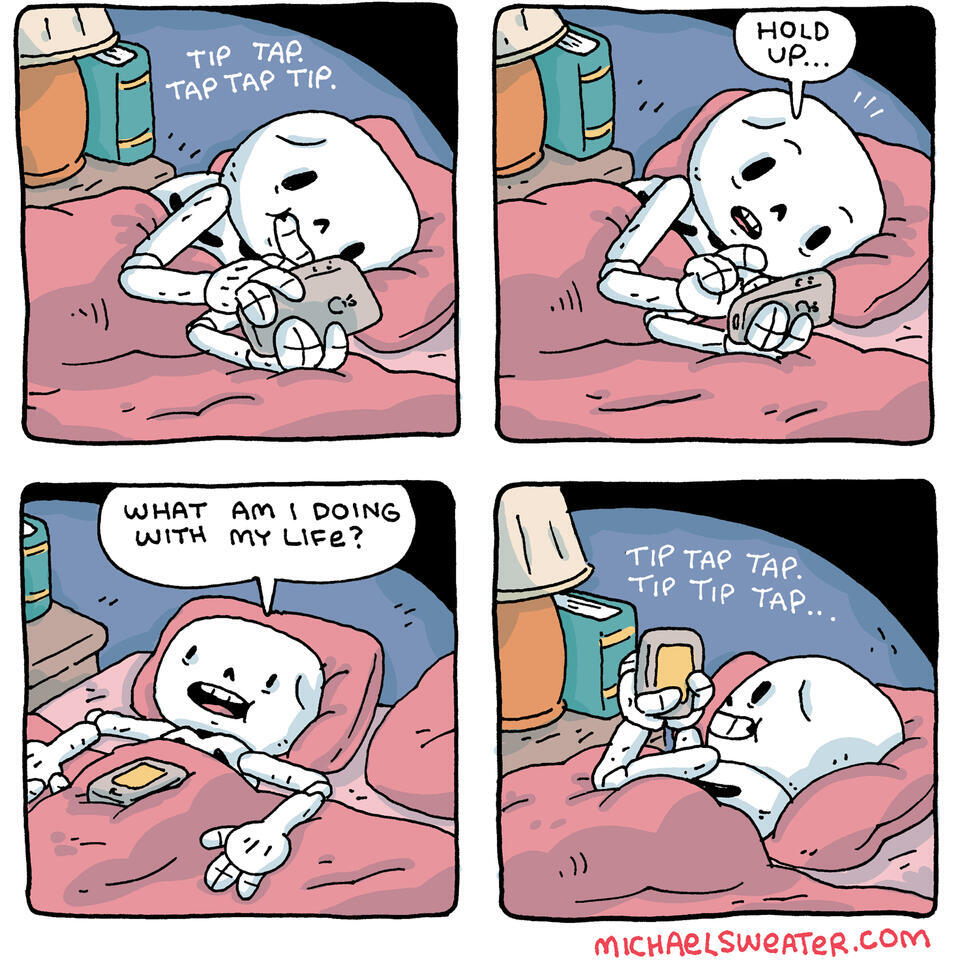
It becomes a cycle. Distraction, pain, relief. Distraction, pain, relief.Which is bad in and of itself, but with each cycle, the consequences of time-wasting intensifies, and with it the drive for escape.
Before long, you're completely ensnared in a vicious closed-feedback loop.
I call it the Doomscroll Feedback Loop.
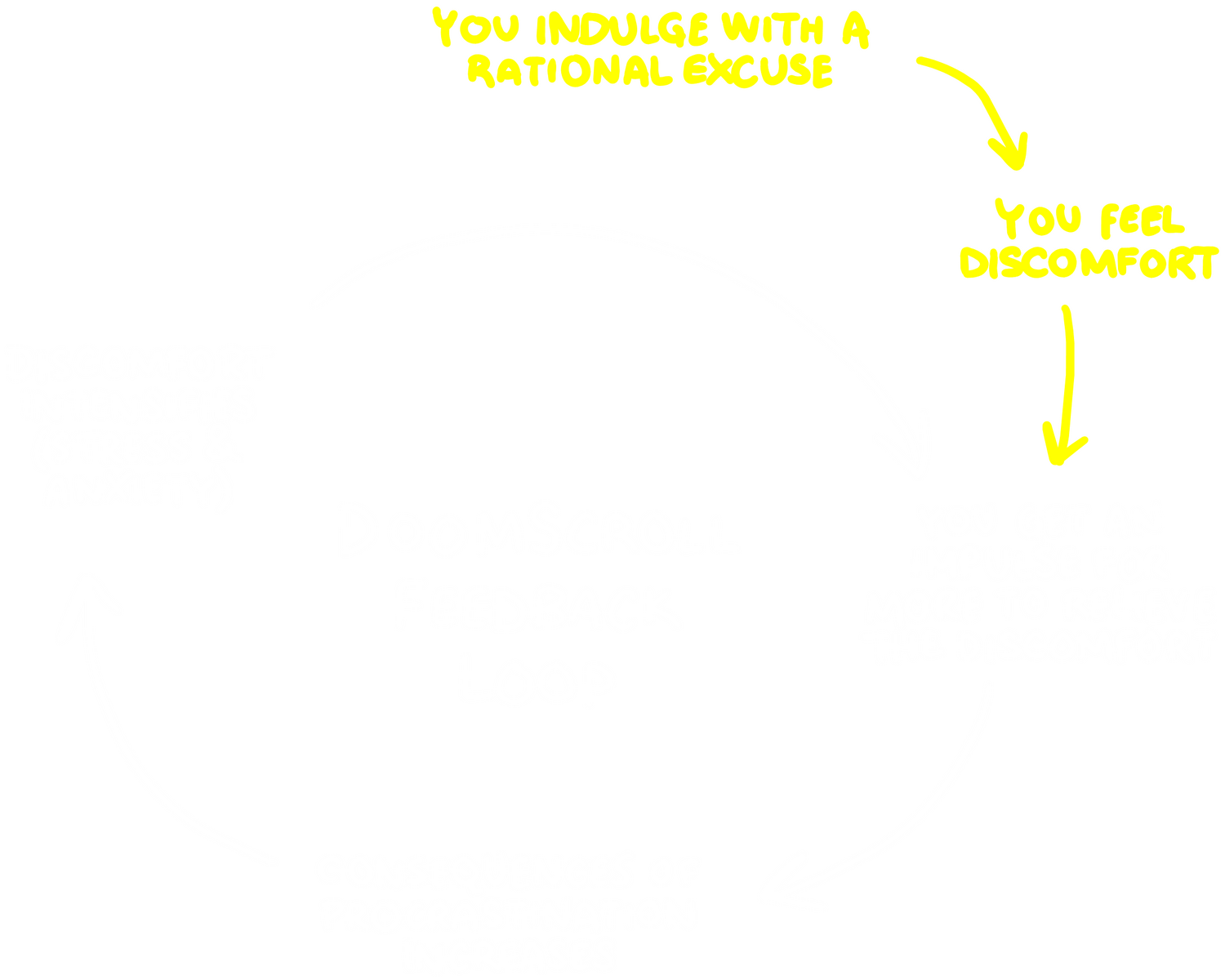
As with all addictions, the drug both causes and cures the disease.
The poison is also the antidote.
And that, dear reader, is how you end up doomscrolling.
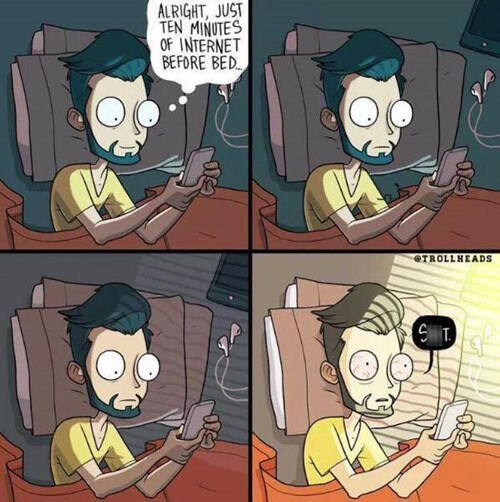
Chapter 2: Why you procrastinate
You know what you want to do but it feels like some invisible enemy has you boxed in… You have enough freedom to feel like you can move; just enough to feel like it’s your fault when you can't seem to follow through and build momentum.
— Ryan Holiday, The Obstacle is the Way
Motivation follows action. Just start and motivation will come.
— Every productivity guru who's never actually had a problem with motivation.
In the previous chapter, I had you first imagine yourself sitting there being productive with some work.But maybe even that requires a stretch of the imagination, as being productive and motivated in any measure is hard to come by these days.
So, what’s going on?Why do we often (always?) lack energy, drive, enthusiasm, motivation—not just for our school or job obligations—but also (and sometimes especially) for the things we care deeply about, like a fun creative project or a clever business idea?
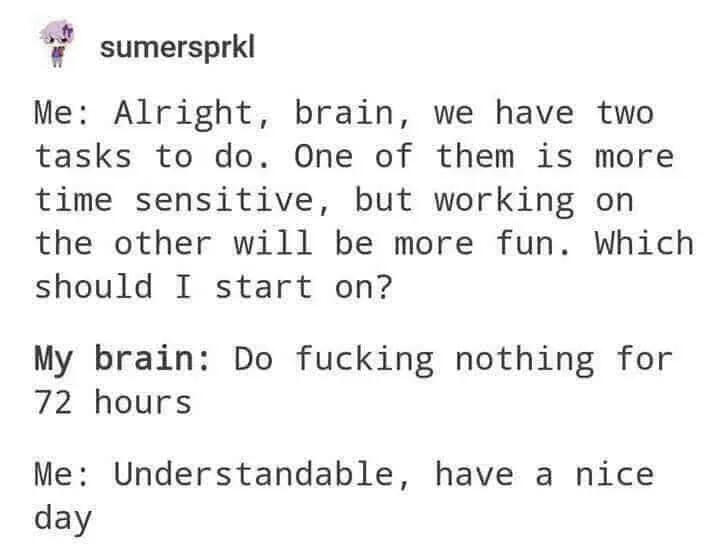
Why can we not "just do it"—if only to prevent the inevitable stress, panic and ill-consequences of procrastination?
Recalling the prologue narrative, why doesn't setting grand goals, doing visualization exersises, and watching inspirational videos actually work for us?
Well... here’s the deal.
You're confusing inspiration with motivation.
You're assuming they're essentially the same when really, they're not.
The word motivation has its origins in the Latin word for “to move”. Interpret this not as the will to move—that’s the domain of inspiration—but as the capacity to move.All the “why” stuff is important… but it’s the stuff of inspiration. And inspiration is the conscious intention to get your work done and achieve your goals. But you have plenty of that. More is not the answer.

Motivation, on the other hand, is the domain of the subconscious. It's there you get the green light to expend precious energy on tasks. Without it, you'll feel blocked and unable to get any work done.
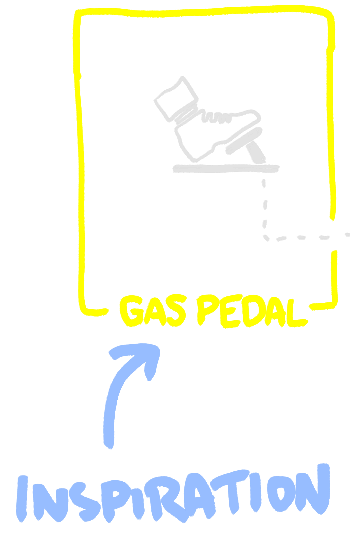
Imagine this with a car analogy.Inspiration is pressing the gas pedal—and you might be flooring it if you have a David Goggins audiobook going.
Motivation is the car's fuel injection system.It's located way deep in the engine such that you have zero direct control over it. It includes an electronic console that “decides” to pump and inject fuel to the pistons, which, when ignited, is what actually propels the car forward.
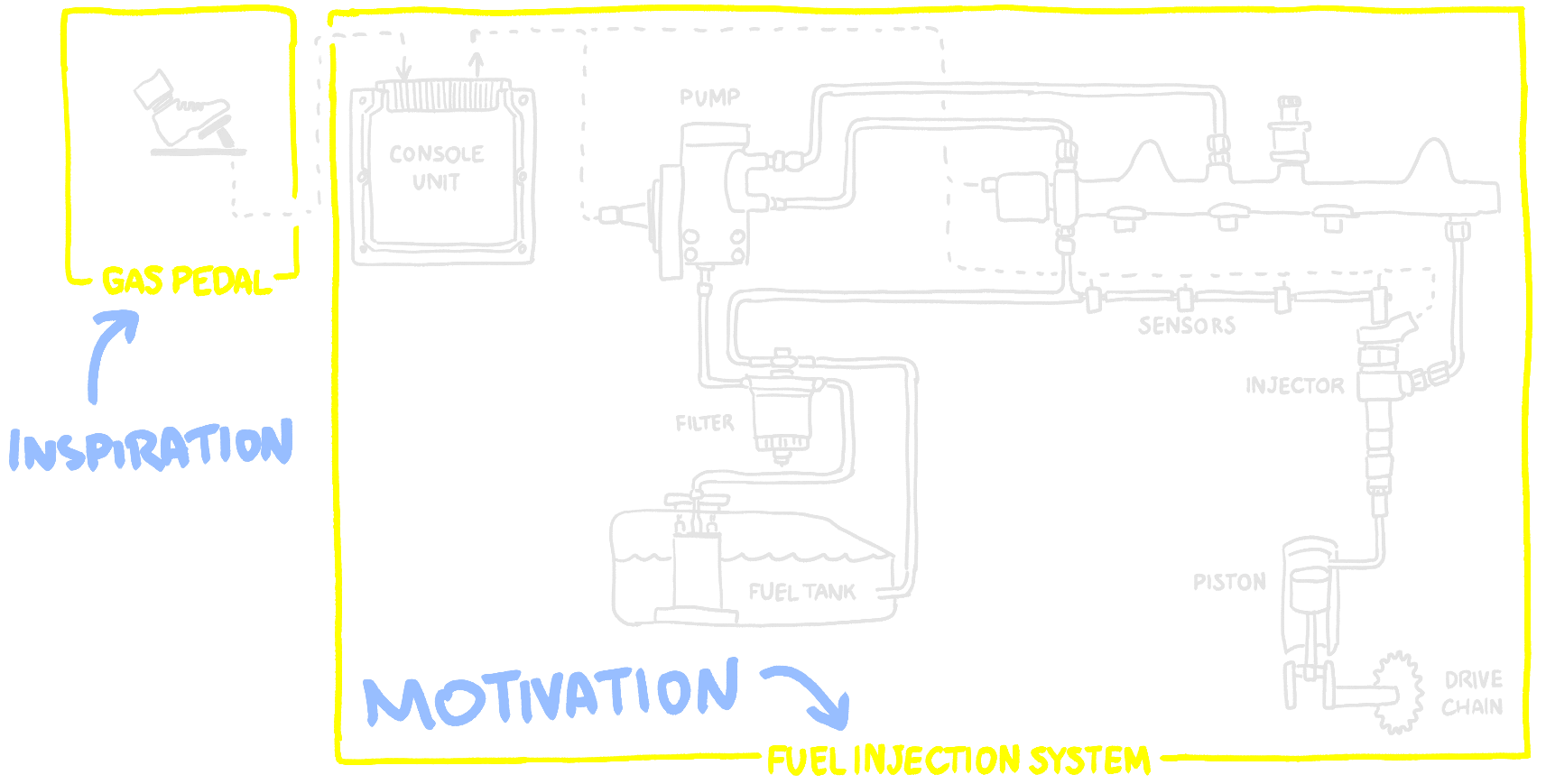
Now, I’m not saying it’s unimportant to get clear on your "whys"—a car won’t go fast or far if the pedal is barely tapped.I’m saying… your fuel injection system’s been disabled. It’s refusing to release any fuel when prompted to.
And that there is your real issue. That’s what’s causing you to feel lethargic, uninterested, and demotivated. That’s what’s causing you to procrastinate to no end. And that’s what you need to fix before anything else.
Motivation Suppression
Us humans have serious survival needs. There’s the obvious stuff like food and shelter, but we also have psychological needs like love, intimacy, status, novely, fun, and connection.

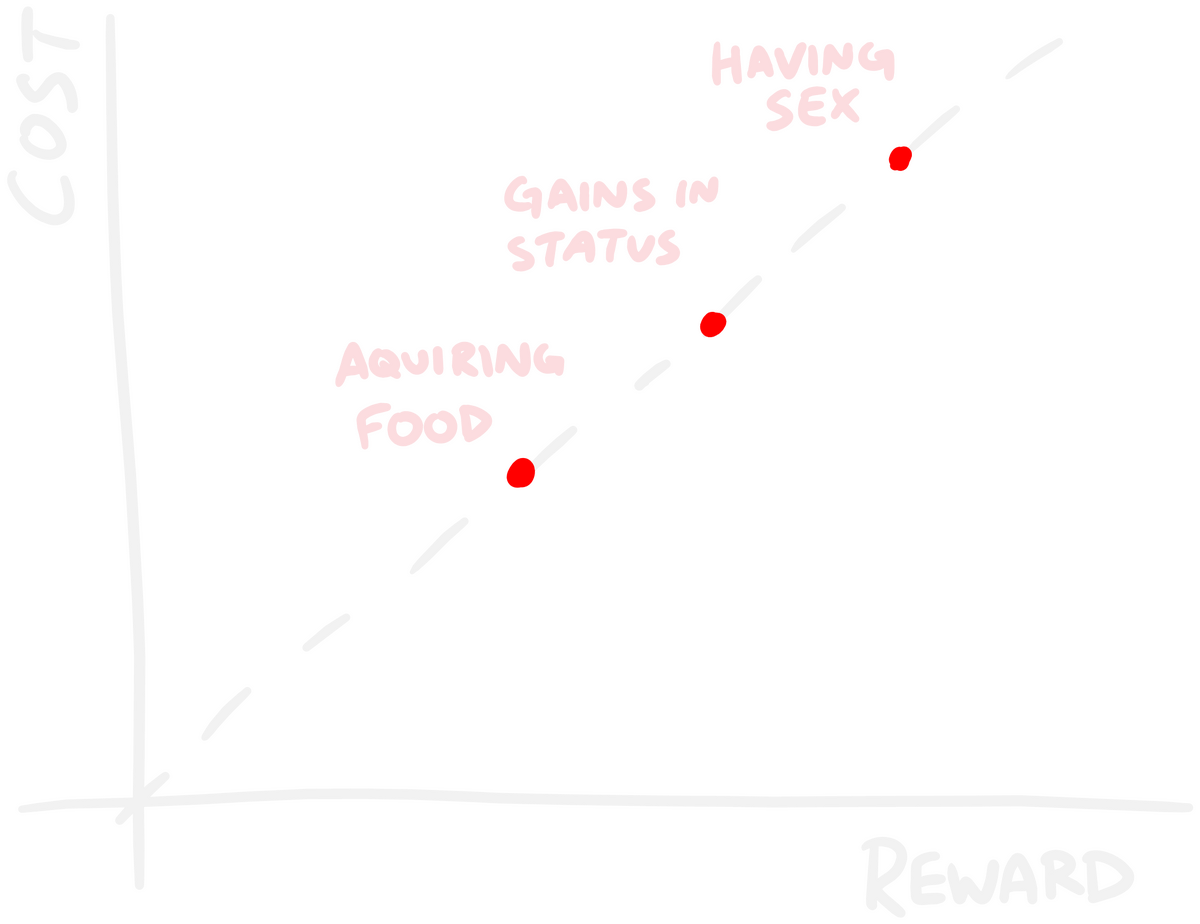
Back in the day, the cost to satisfy those needs was egregiously high.It took boatloads of effort, time, and risk. We needed to be enticed to do the work; to be rewarded after paying the cost... otherwise we’d sit around and do nothing.
We therefore evolved a motivation-to-reward neural pathway: a system that subconsciously drives us to put in work, to take on tasks and missions when opportunities arise. This system has us expend energy, to put in hard work… all in the pursuit of survival-affirming rewards.
For the pleasure of food, you had to hunt.For the pleasure of intimacy and sex, you had to socialize and risk being rejected and ostracized.For the pleasure of status, you had to acquire resources and form alliances.
All of which took a lot of energy.But, if it all worked out, a satisfying reward wouldcome. And it was always just worth it, meaning there evolved to be a tight and fair balance between the reward and its cost.
But that’s all changed in a blink of an eye.
With today’s vices, we trick our brains into perceiving that these base needs are satisfied with virtually no work or risk.
For the pleasure of food, there's DoorDash.For the pleasure of intimacy and sex, there’s porn.For the pleasure of status, there’s social media.
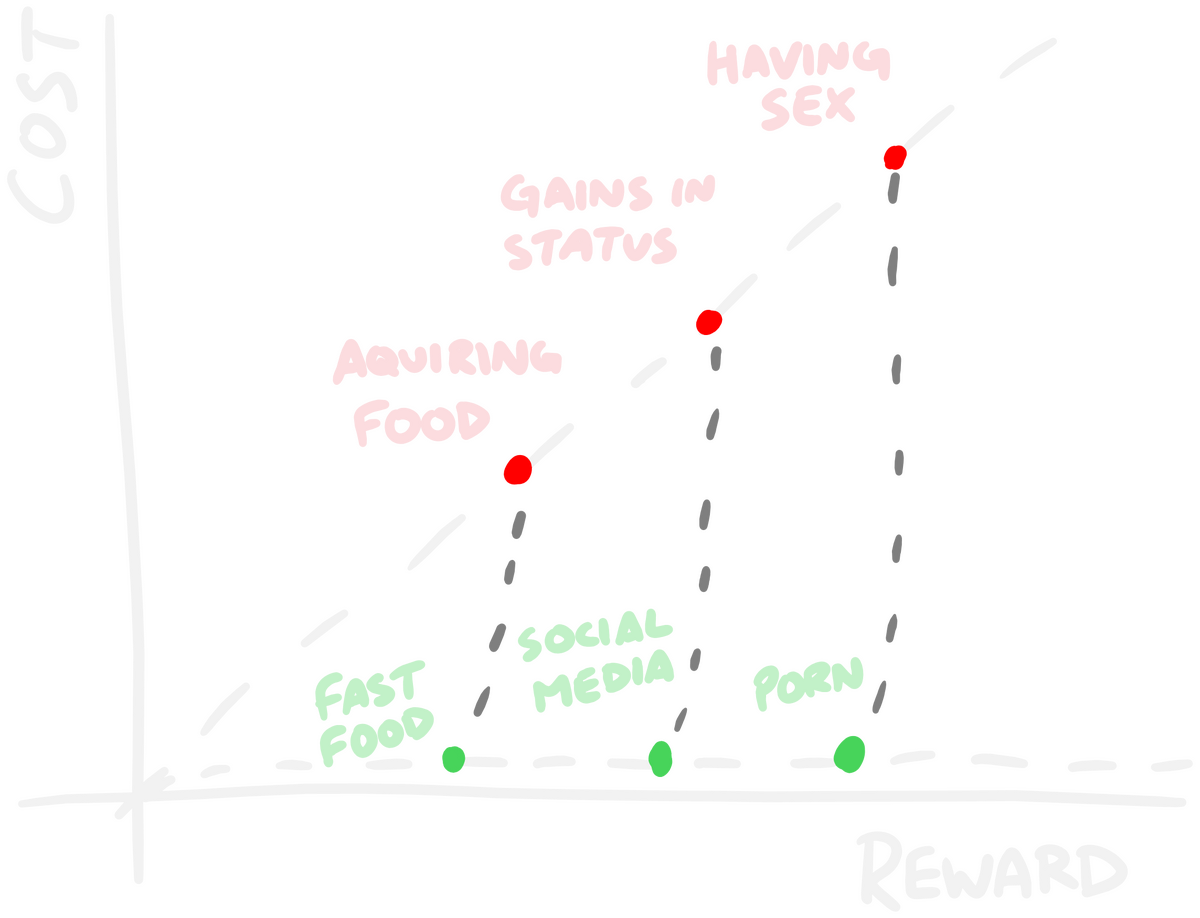
Every single one of our physical and psychological needs can be “met” through the shortcut of a vice—a consumable product that can trick our brains into delivering a reward via artificial or vicarious means.Today’s tech, food, and entertainment industries have left no stone unturned.
For thrill and adventure, there are video games.For the gratification of acquiring knowledge and being part of an opinion-aligned tribe, there's Reddit and TikTok.For the satisfaction of contribution, there's slacktivism and virtue-signaling on Facebook and LinkedIn.
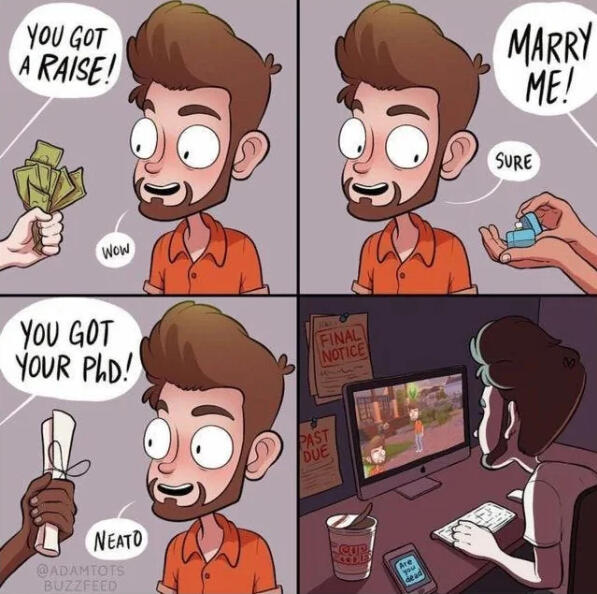
With these shortcuts, the time-to-reward is milliseconds.The energy cost? A thumb swipe.The risk? Zero.
Sounds amazing, right?
In many ways, sure, our modern utopia of abundant, easy rewards is exactly that. Amazing...

But there are side effects.
On a societal level, we're seeing unprecedented rates of addiction, ADHD, anxiety and other mental health issues. Chronic procrastination and underachievement have become real societal issues.But without the frame of reference of what our lives were like before all these modern vices, we're left to blame it all on our apparent impulsive, lazy, and indulgent nature.
But that’s neither true nor fair.
Because we just weren't built for this world.More importantly, you weren't built for this world. You, the real you, isn't lazy. You, the real you, isn’t careless. You, the real you, doesn’t lack discipline or self-control.You're just being cognitively impacted by vices. And you're not even realizing it.
Hidden Consequences
We humans evolved in a world of scarcity. Conserving energy was a matter of life and death. We're thus super averse to expending energy without really good reason.
I mean, it makes sense.A lioness is not driven to chase a herd of aggressive gazelles if she just ate a giant zebra steak. An elephant is not motivated to walk for hours under a hot sun to find a new source of water and plants if his belly is already full.These animals know it’s time to rest, to chill, to veg.

So, what do you think happens when you spend the entire afternoon indulging in your vices—consuming junk food, social media, video games, streaming content, porn—and experiencing all sorts of rewards?What message is your nucleus accumbens (the motivation center that guards the fuel injector of motivation) receiving from your parietal lobe (the area that processes sensory information)?
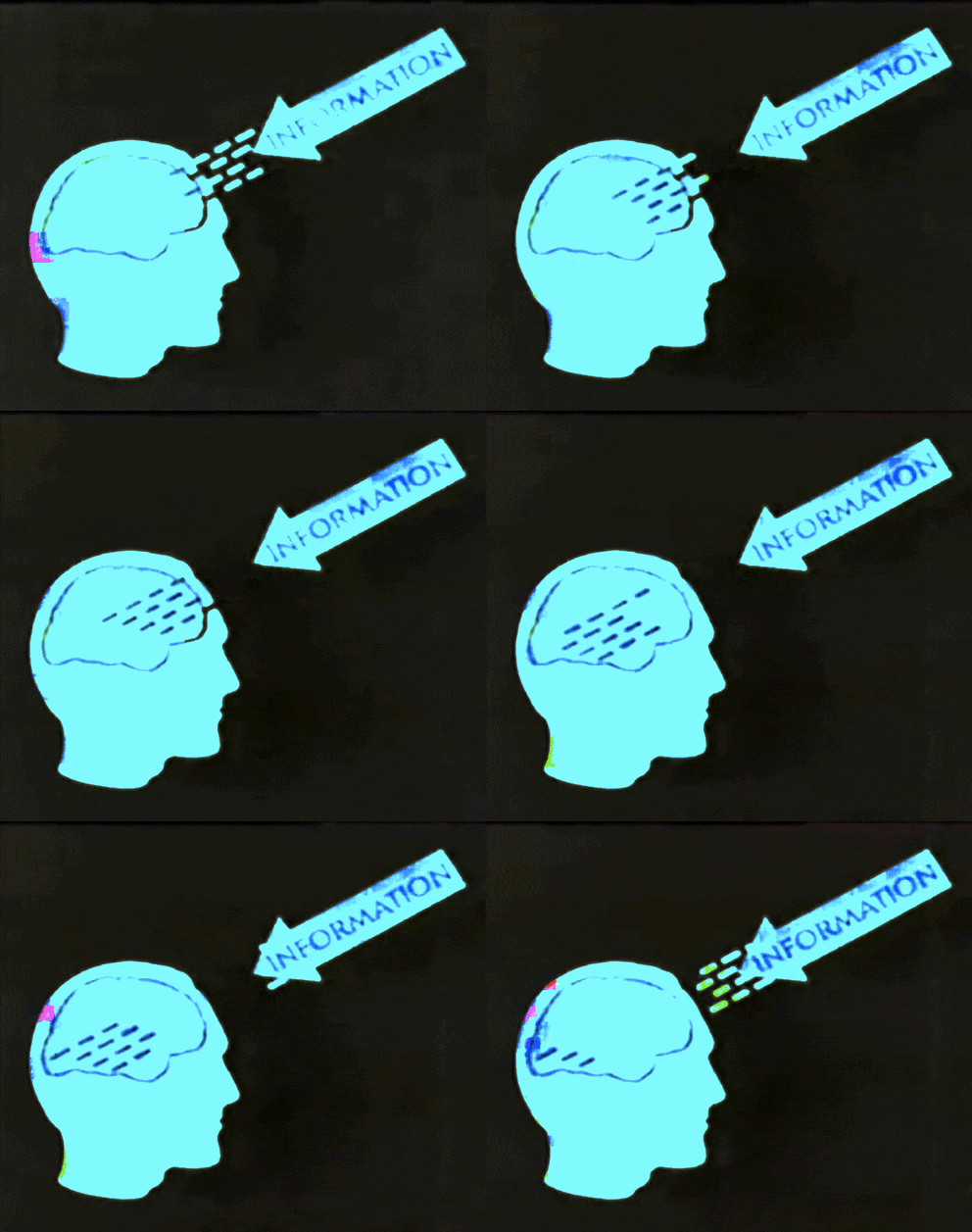
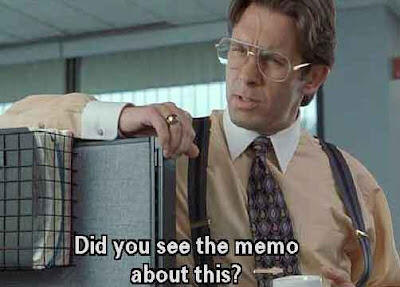
I know these regions of the brain communicate through electric pulses and neurochemicals, but I like to imagine them communicating via an endless series of office memos:
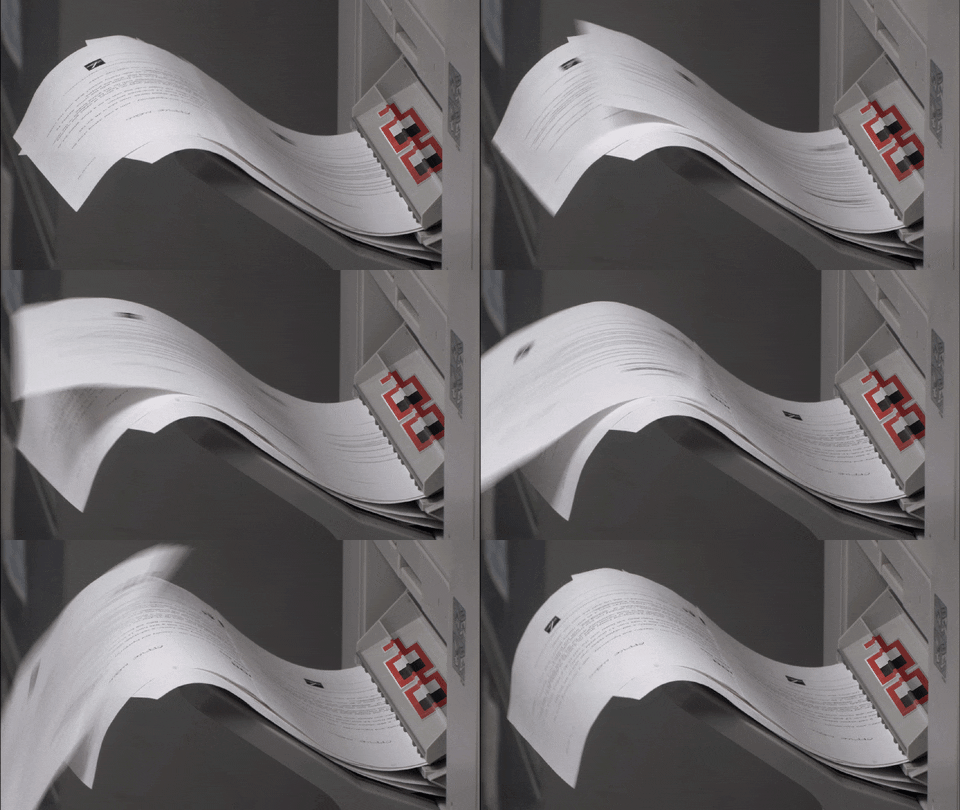
MEMORANDUM
TO: Motivation Center
FROM: Committee of the 5 Senses
SUBJECT: Conscious Brain’s urgent request for motivation and energy_This memorandum serves to inform you that our individual is surviving exceptionally well.The subject has recently ingested a high-calorie meal (junk food). They just socialized (Instagram) and mated (porn) with several high-status and attractive people.They also just had a thrilling adventure (video games), followed by a dramatic experience that resulted in a new long-term mate (Netflix). They are part of a big, safe, unified group that shares a worldview (Reddit, Twitter).Given the substantial energy expenditure typically associated with these activities, we recommend implementing a recovery period.Any energy requests from Conscious Mind are to be denied._Also, Solid Waste Management is reporting a backlog. Please generate a craving for coffee.
As a result of this messaging, the motivation center will squash any request from your cerebral cortex (conscious mind) to use up energy.
It just won’t let you do more work.

It doesn't matter if your conscious mind is flooring the gas pedal, demanding the burning of calories.It doesn’t matter if your conscious mind is stressed and panicking about the impending doom of reckless procrastination. About the consequences of neglected projects, assignments, or exams.It doesn't matter if your conscious mind is pointing to the potential for real, earned, satisfying rewards that come from actual life achievements, rather than fake, vicarious ones.
Your subconscious—the electronic console responsible for pumping and injecting fuel—is utterly convinced that you’re surviving exceptionally well, and that you need to rest.
Doing the work is simply non-negotiable.
You've reached the end of the free preview :/
Select one option to keep reading preorder at 50% off
(release date December 23) ↓
ALL ACCESS - ONE TIME
Permanent access to the book (at launch)
Direct Q&A support
Go Deeper article series
Private WhatsApp groupWeekly office hour AMAOngoing support of the mission
ALL-ACCESS - QUARTERLY
Permanent access to the book (at launch)
Direct Q&A support
Go Deeper article series
Private WhatsApp group
Weekly office hour AMA
Ongoing support of the mission
Click here if you already have full-book access.
Your linked worked.Come back here December 23, 2025 for the rest of the book. ✌️
The takeaway is this: consuming vices do more—a lot more—than just waste time.Vices lead to a short-circuiting of your motivation-to-reward pathway.
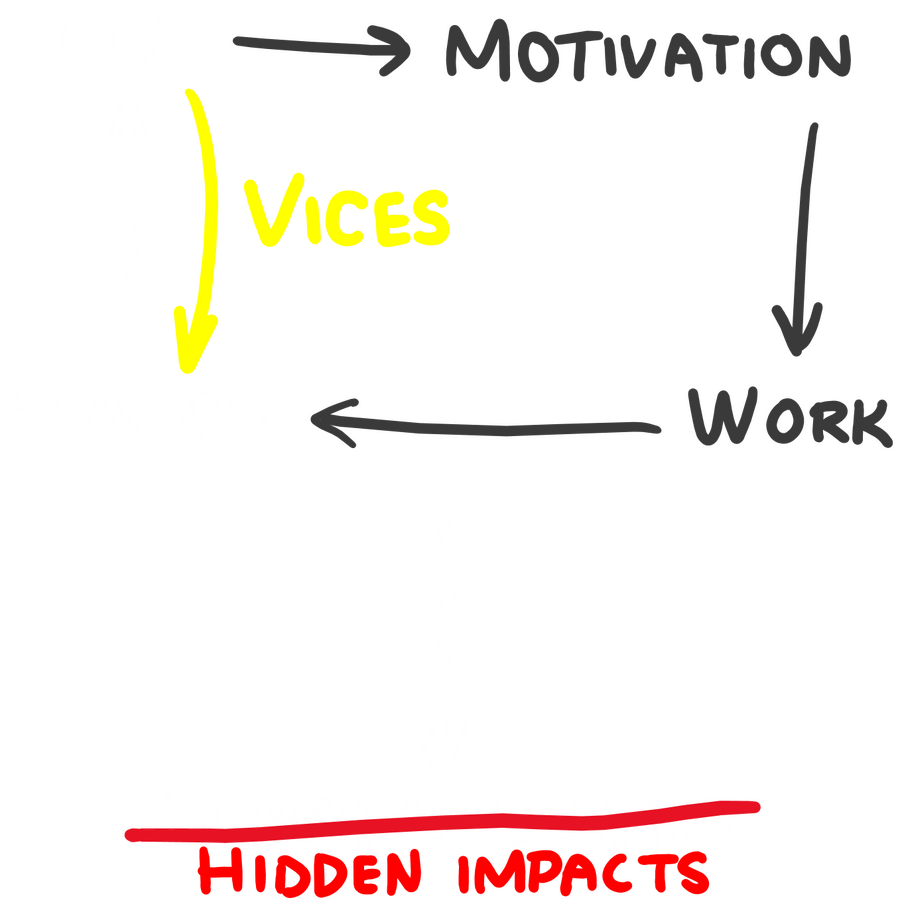
They decimate the need for motivation and work to survive. They lead to psychological impacts, greatest of which is that near-constant state of lethargy—that dismal, “ugh I just don’t feel like it” sensation.And when you don’t feel like it, you can’t help burning away time—that is, until something external—some real and urgent survival threat like getting fired or expelled—reactives your dormant motivation system, and gets you to cram in the work.
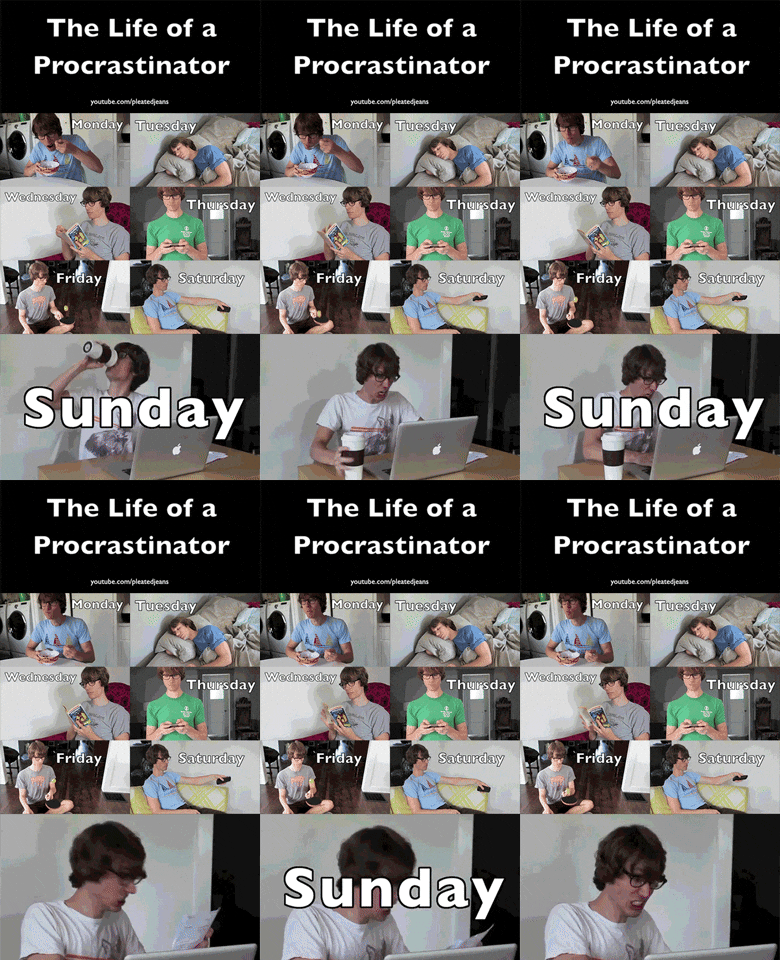
In other words you procrastinate.You procrastinate... to survive.
It's obvious right? Trivial even.
Cut out the vices.

Log out of accounts. Delete the apps. Clean out the house.Stop with the artificial stimulation. Stop with the needless distractions.Just remove the source of all that stifles you into a life of stagnation.
Because, without vices, your world would finally open up to all sorts of amazing possibilities.
And it wouldn't even take all that long.After a day or two, you'll feel lighter. More clear-headed. Just all around better. And as that happens, your natural motivation will begin to creep back up.
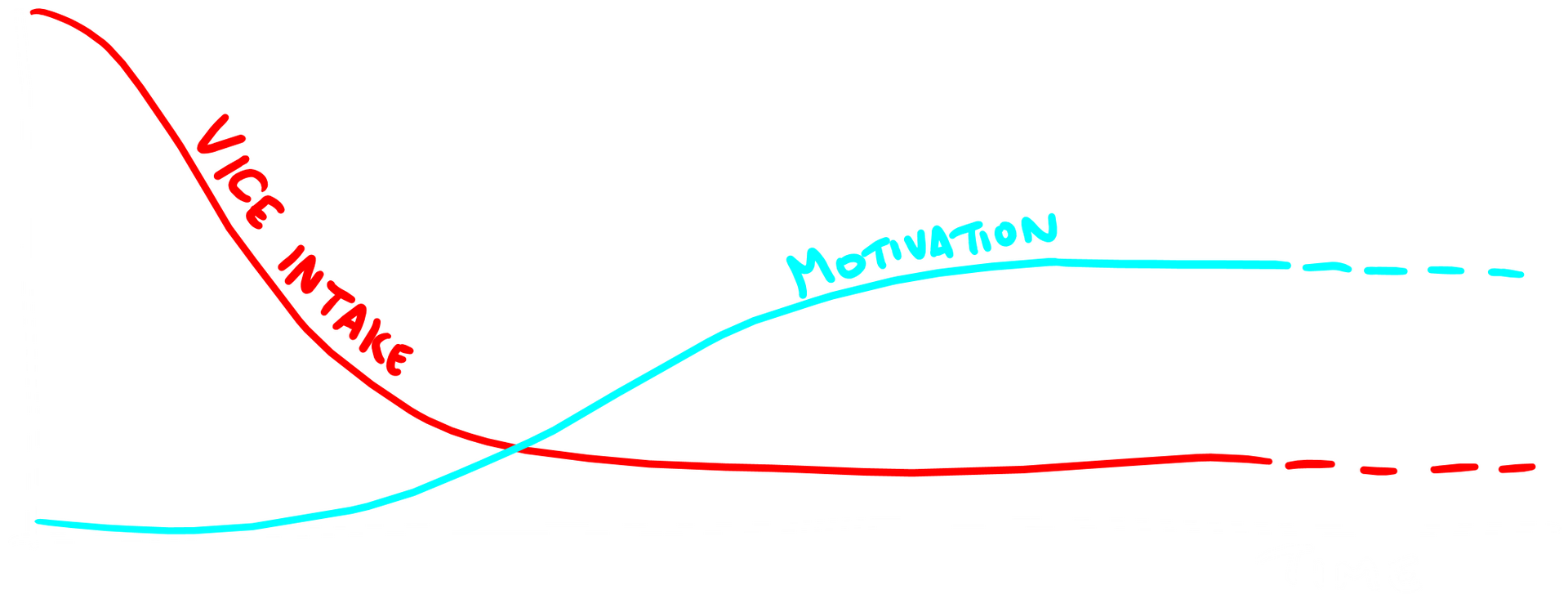
From there, you'll start showing up to things. Give it another few days, and you'll start having some solid work sessions.Give it a few weeks, and you'll have formed some solid habits.Give it a few months, and you'll have achieved some solid goals.
[each has it's own graph]
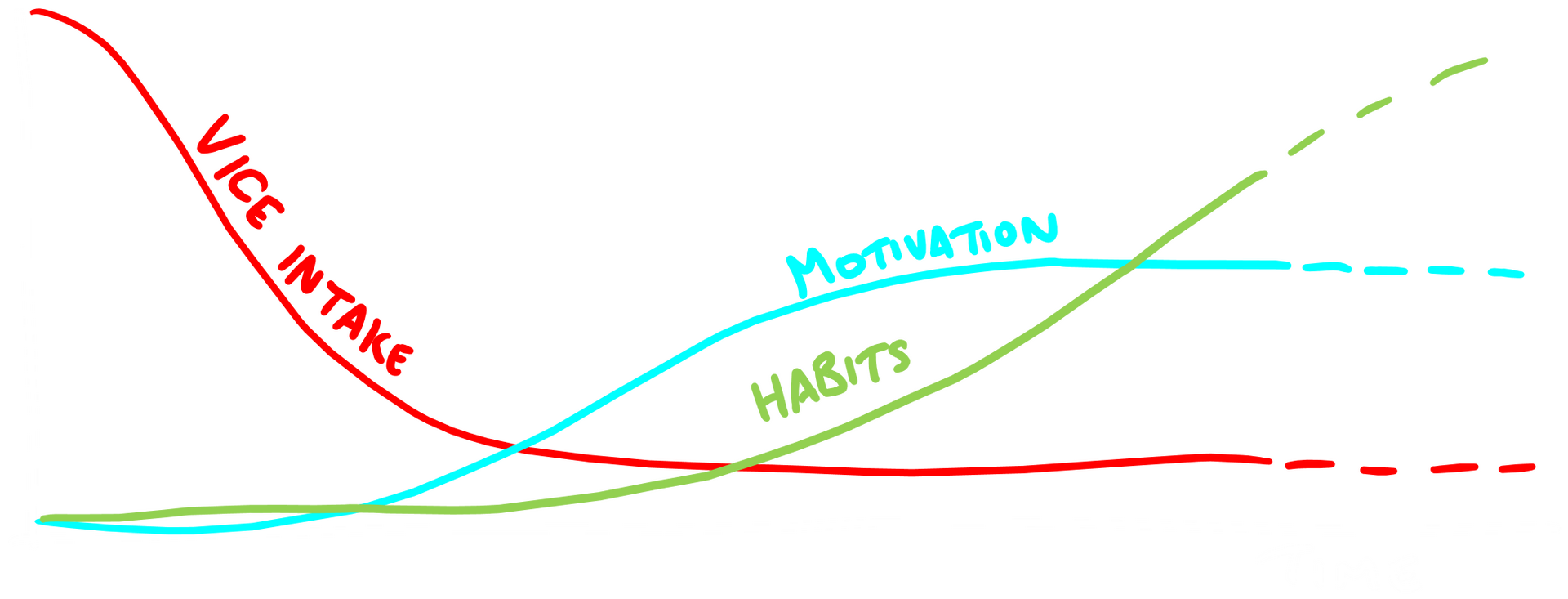
None of it forced. None of it coerced. None of it through willpower or self-control.Just honest, natural flow towards real rewards and real benefits. Towards you living your best life.

Simple, right?
Well... not exactly. Cause this won't be your first rodeo, will it?
You’ve already made promises to quit or cut back on vices.You've already recognized that you barely enjoy them anymore—that it's hardly worth it.You've already suspected some brainrot-type impacts to your attention-span and emotional well-being.And, at the very least, you've realized that vices simply gobble up so much precious time... and, it'd be nice to, you know, not procrastinate recklessly for once in your damn life.
But it never sticks, does it?
All your pacts, promises, and resolutions?They never last.You keep going back—even when you know better.
Especially when you know better.

Same old habits. Same patterns. Same loops. Same regrets. Same self-loathing.
The question is why?
Why do you keep reverting back to your old ways?Why are you stagnating through life, despite wanting to change?
Like a moth to a flame
The answer to this all-important question can be found by considering the life and times of...
a moth.

You see, during the day, our little moth friend hides and sleeps. It's at night that he comes out to find something to eat.But it's dark, and his little bug eyes don't provide the best vision. So he's come to rely on the brightest object in the sky for orientation, which is usually the moon.
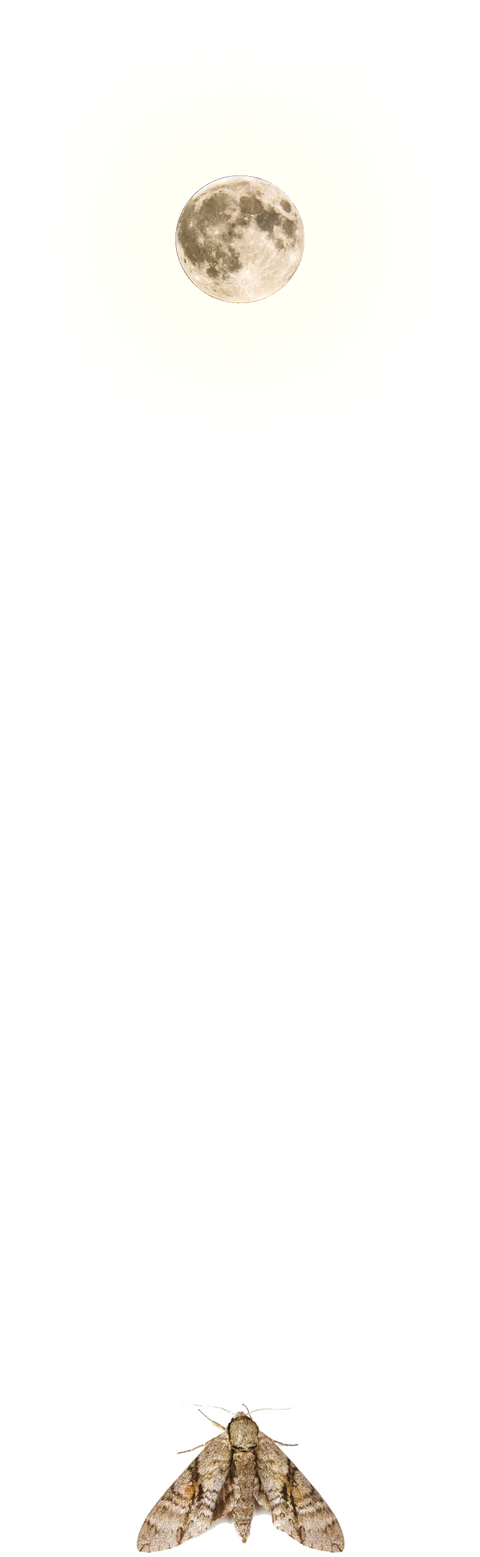
Now, if we were to observe this moth, we might define—at any given moment—an action path. It's the path that best keeps him away from predators and moves him toward the most food.We might call this the "Appropiate" path.
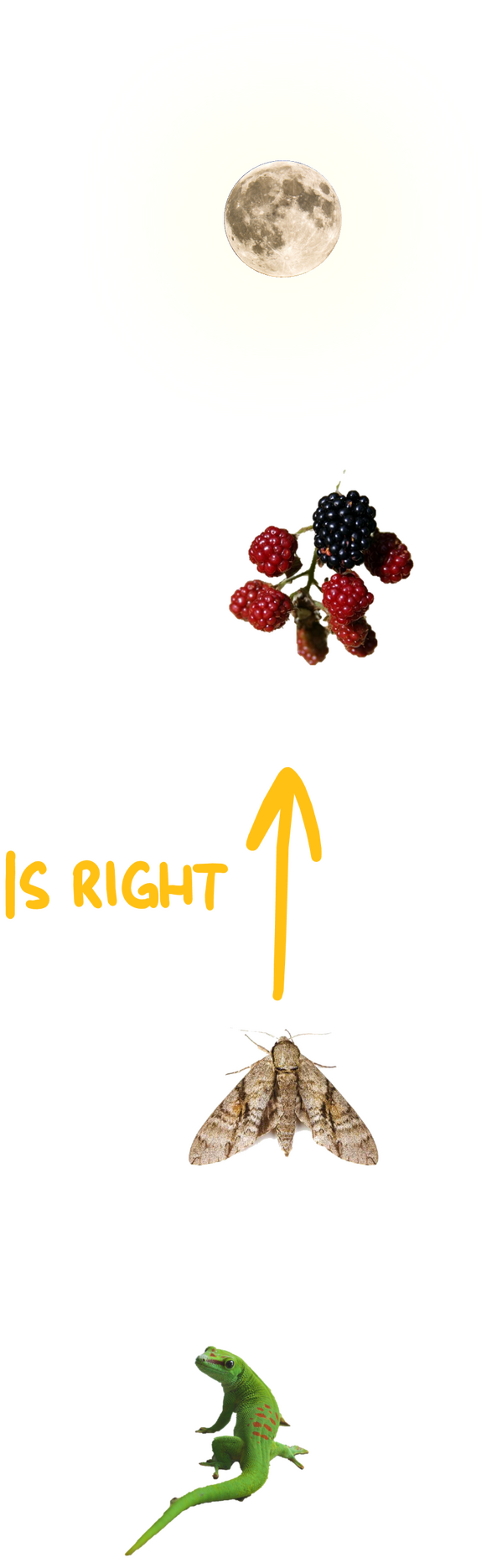
Thing is, our little moth friend doesn't need to think about any of this. He’s not weighing pros and cons or consulting best-practices flowcharts.
No. Taking the Appropiate path—the one that’s best for survival—has simply come to viscerally feel right. It's what he prefers to do.
Millions of years of evolution has made the Appropiate path perfectly aligned with the Prefered path.
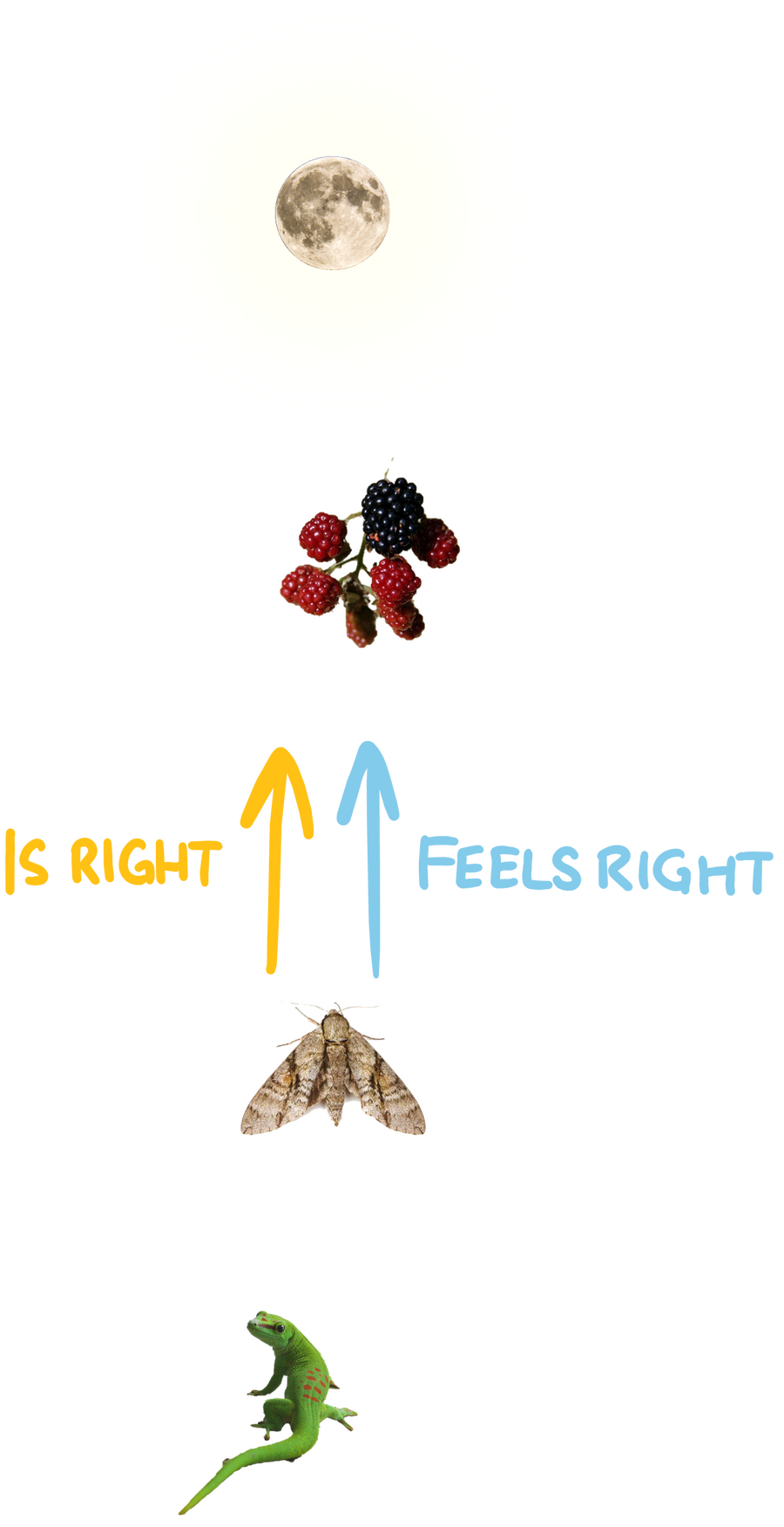
How do I know all this? Like, how do I know moths aren’t secretly skilled in critical thinking?Well, it’s because humans came along and introduced something entirely new to their environment.
We added artificial lights.
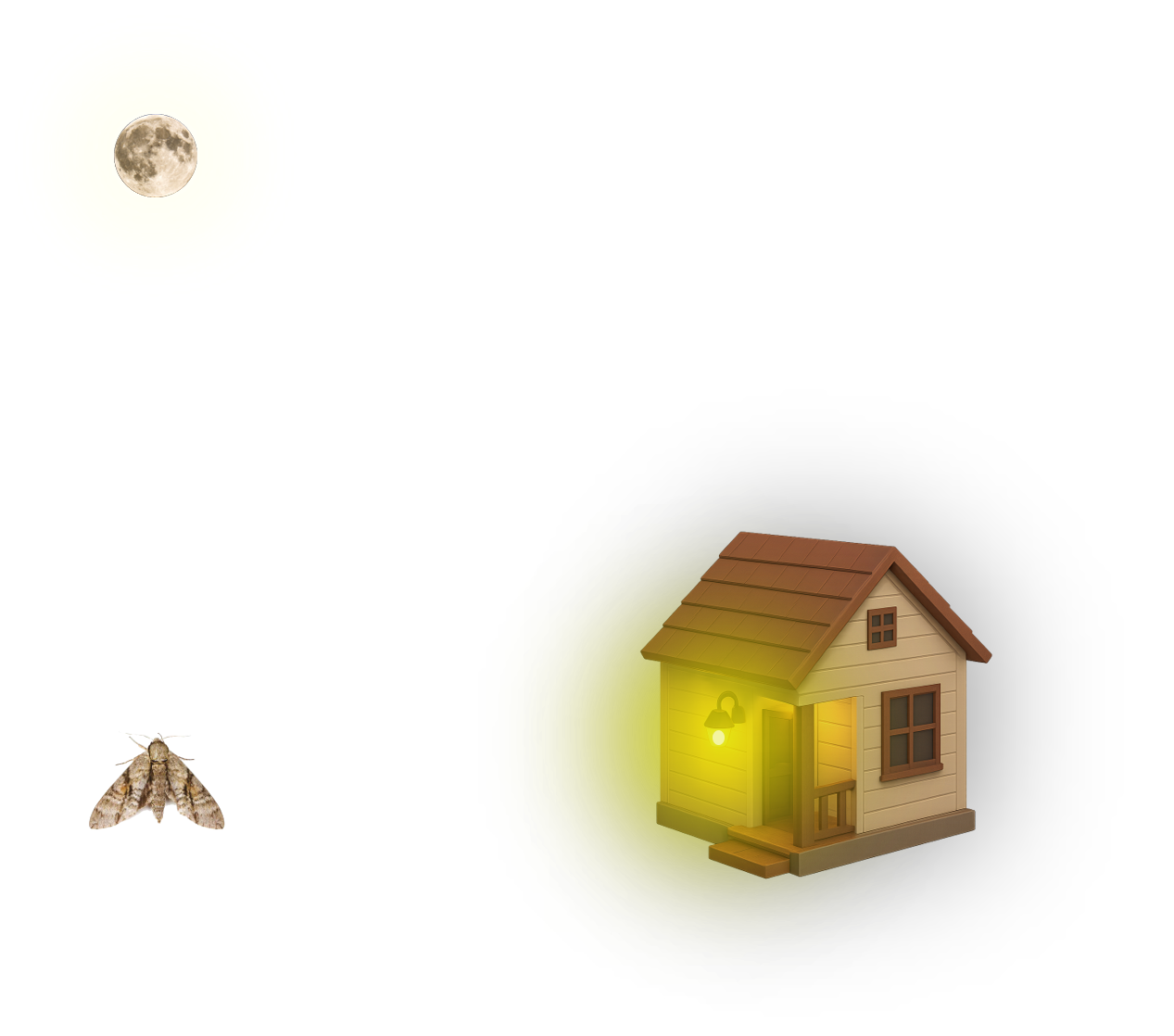
With these lights, nothing fundamental has changed.Food still needs to be found. Predators still need to be avoided. The moon's still happily glowing bright in the sky.The Appropiate path—the one that ensures survival—stays exactly as it was.
What has changed, however... is what feels right for the moth—what, to him, he prefers on a visceral level.
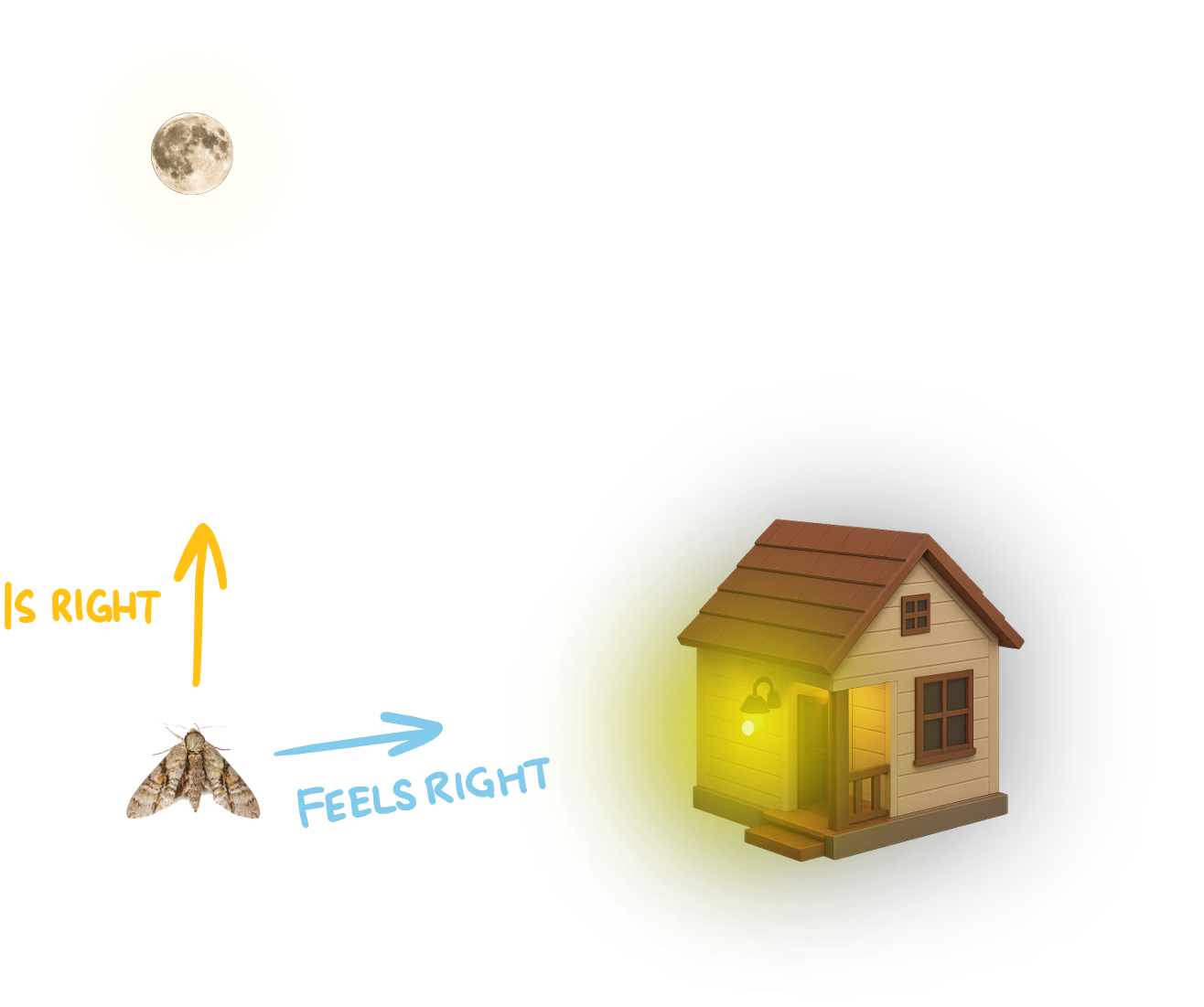
Artificial lights are brighter, warmer, and closer than anything else in the night sky. As such, they disorient the moth, causing it to fly in erratic patterns as its reference point—once steady for millennia—just won't stay put.All the while, he’s super confused. Because, at every moment, he's still doing what feels right. His looping feels purposeful. It feels like survival. It feels like his only way out.
But it’s not.It's the opposite. He's not acting with purpose. He's not surviving. In fact, he's at risk of collapsing from exhaustion or else getting tangled up in a cleverly positioned spiderweb.
Simply put: the Appropiate path—the one aligned with survival—has been wrenched apart from the Prefered path.
Millions of years of painstaking evolution... undone with the flick of a switch.
It’s easy to scoff at the irrationality of moths. It's like,C’mon man… clearly that bright, hot light isn’t the damn moon. Why don’t they ever learn and adapt? Moths are pretty stupid.
Okay, sure… but, are humans really that much better?
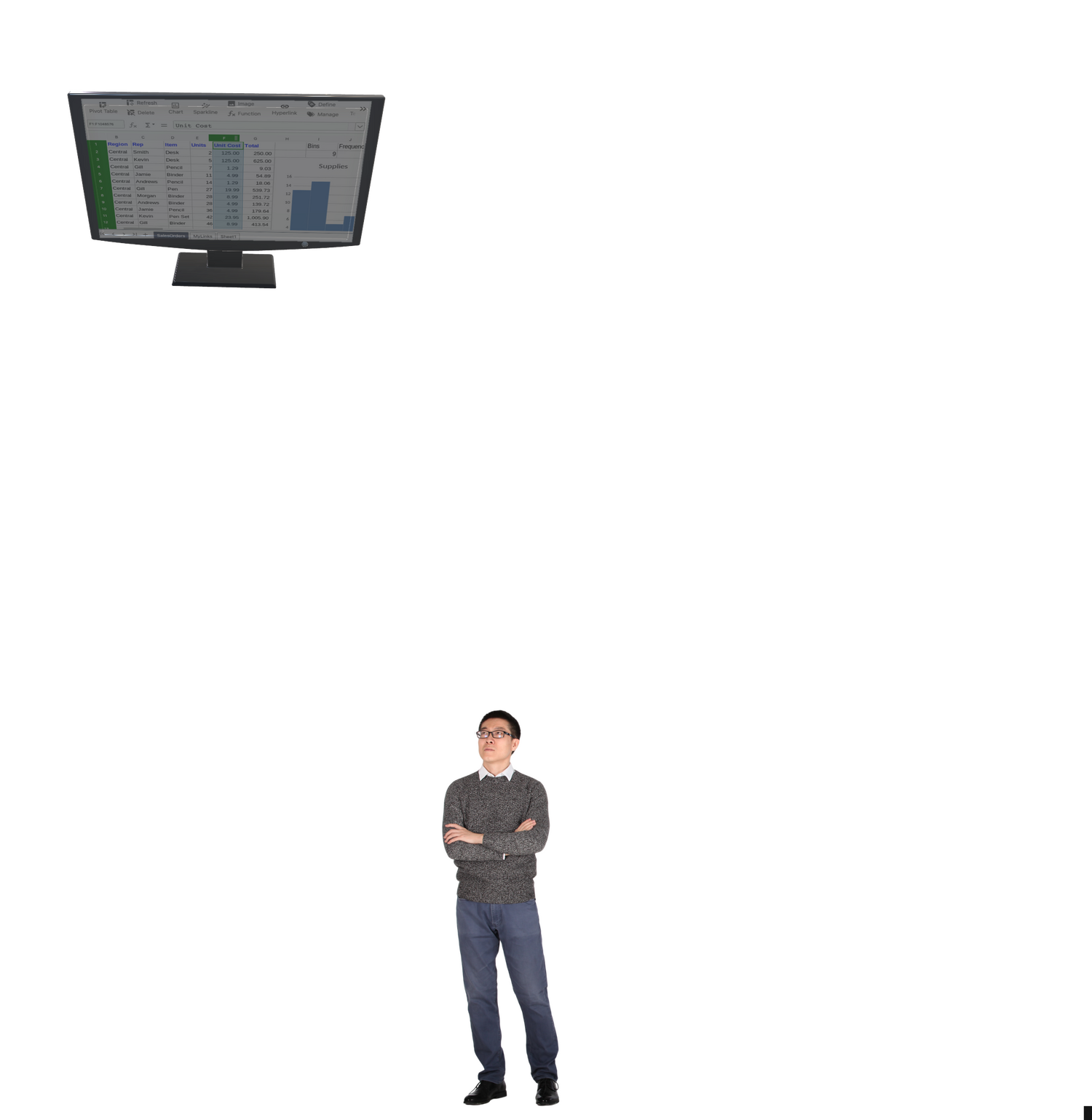
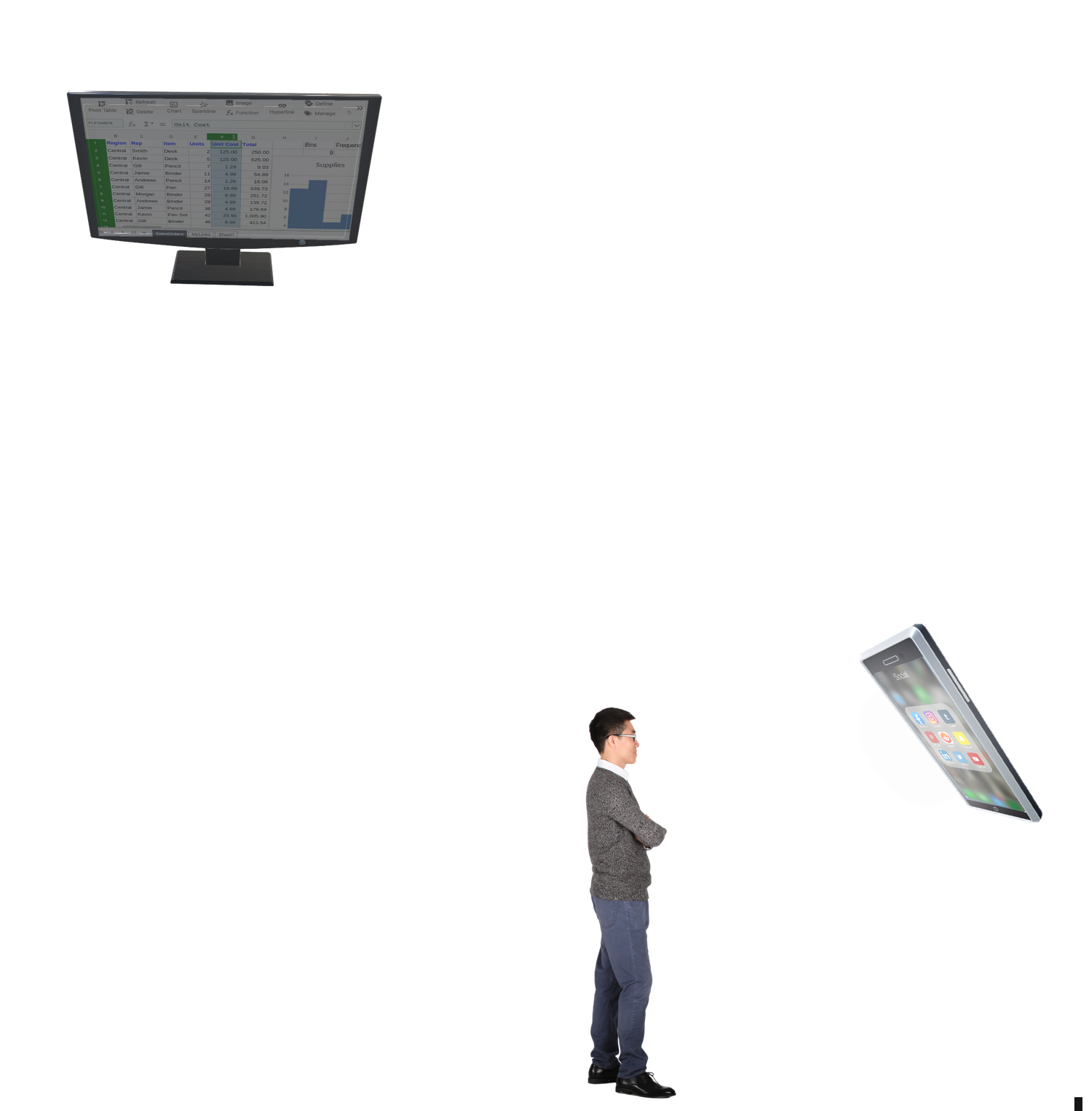
I know. Funny stuff.But let's back up a bit—add more context for that punchline.
Yes, us humans have big, complex brains.Yes, we can reason and forecast and plan.Yes, we’re more sophisticated than moths... but mostly in the way that we don’t use a physical point in the sky to orient our actions.Instead, we direct ourselves with a metaphoric one—one we might call our North Star.
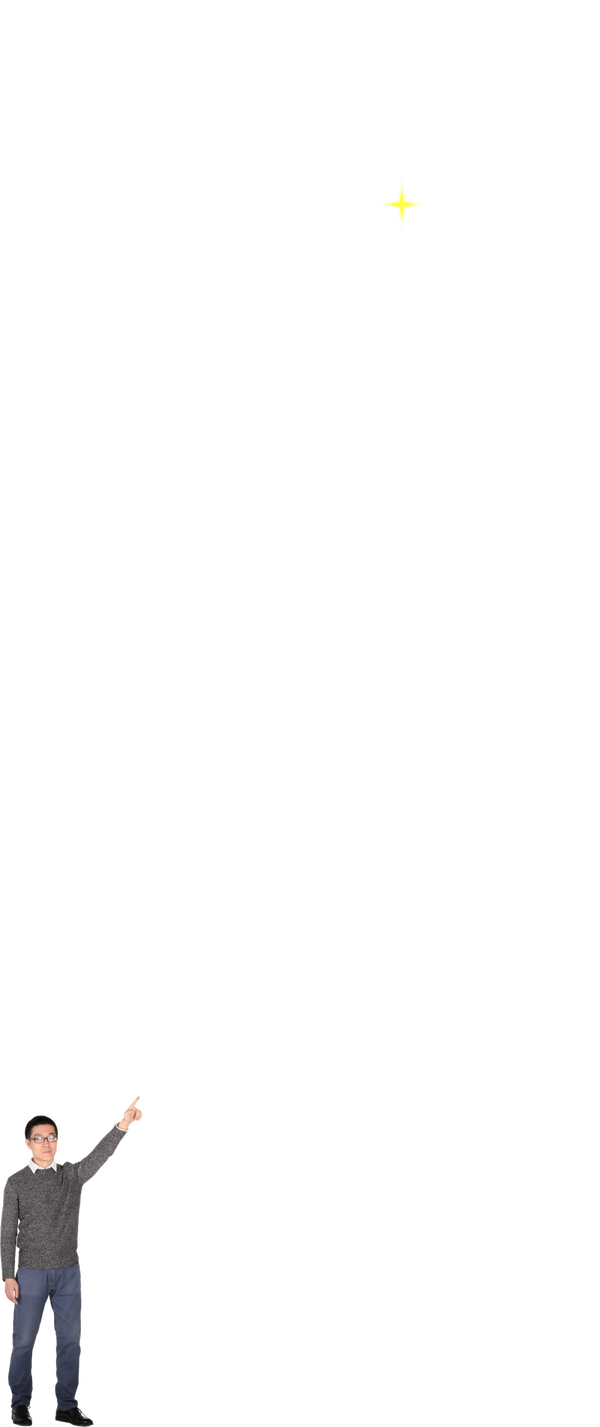
Our North Star represents our highest ideals and values. It’s what we believe will guide us to our aspirational identities, to our goals and ambitions, to the most meaningful experiences and satisfying rewards life has to offer.
Having that kind of internal compass, oriented towards a better, more ideal future, is also a survival adaptation.We’re tribal by nature—so whether our goals are vain (like acquiring and displaying material wealth) or selfless (like caring for the vulnerable), it’s all to our species’ greater benefit.
So, through millions of years of evolution, the Appropiate path evolved to be tightly aligned with our Prefered path.
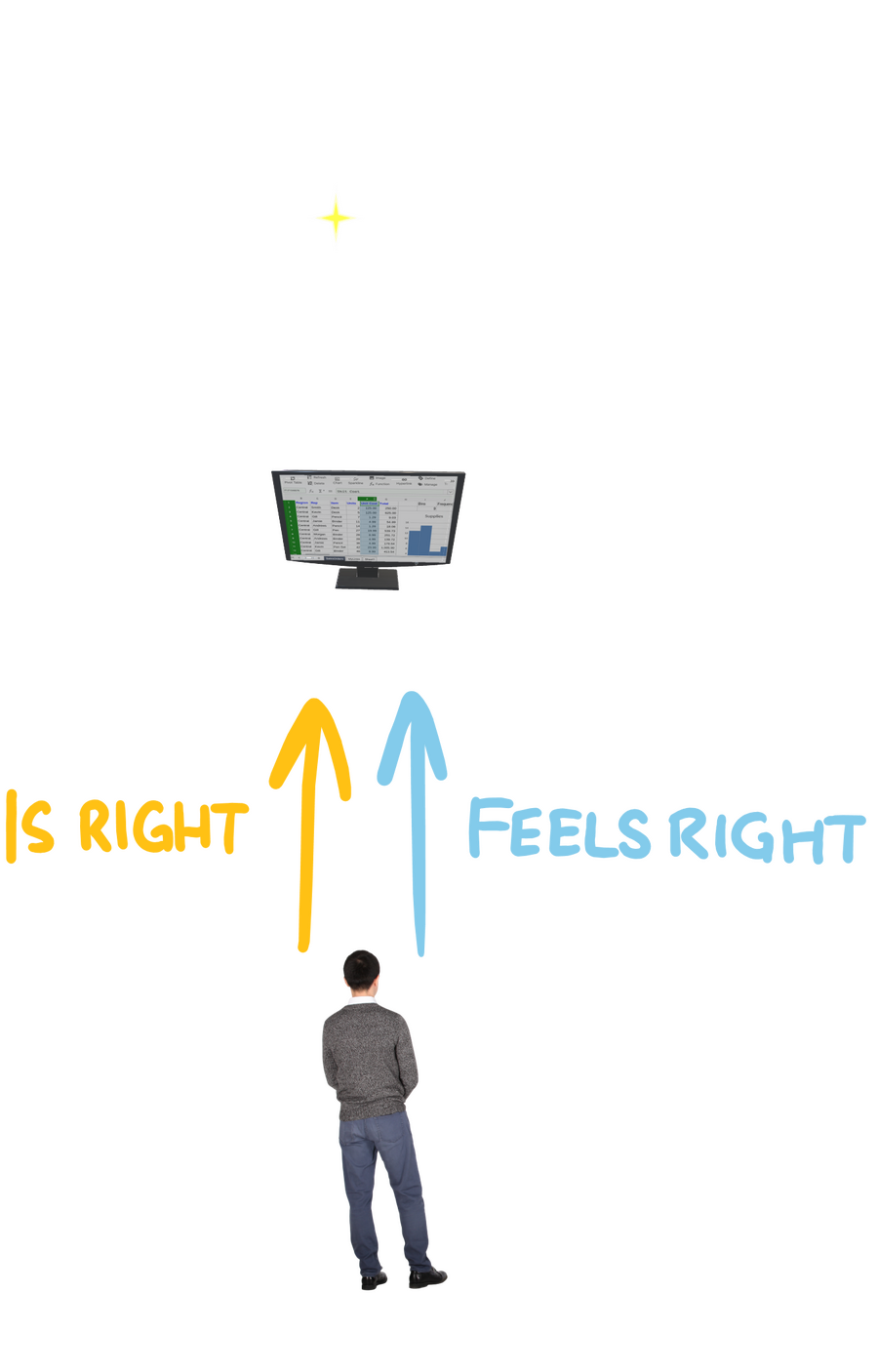
Which is great because humans, like all animals, are driven to act based on subconscious preferences—on quick visceral I want to do this type feelings—not on slow logic.We act on what feels right, not what’s rationally best.And that system worked beautifully for millions of years… that is, until we introduced something to our environment that’s as new, foreign and disorienting to us as artificial lights are to moths.
We introduced vices.
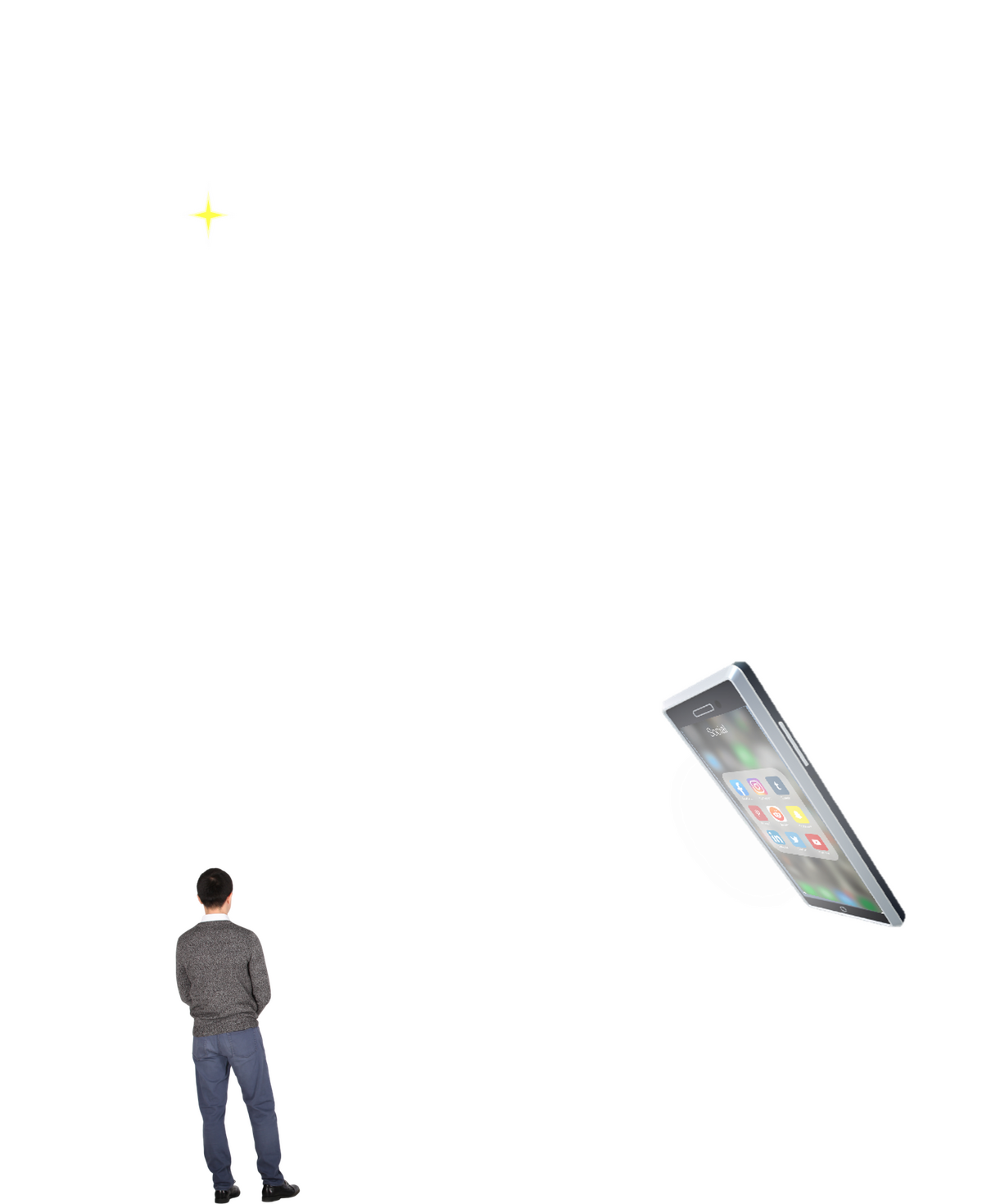
Vices are infinitely brighter, warmer, and closer than our faint and distant North Star.Because they promise survival rewards faster, easier and with less risk (see Chapter 2), they've come to pull our sense of we prefer to do completely out of alignment with what's actually appropiate.
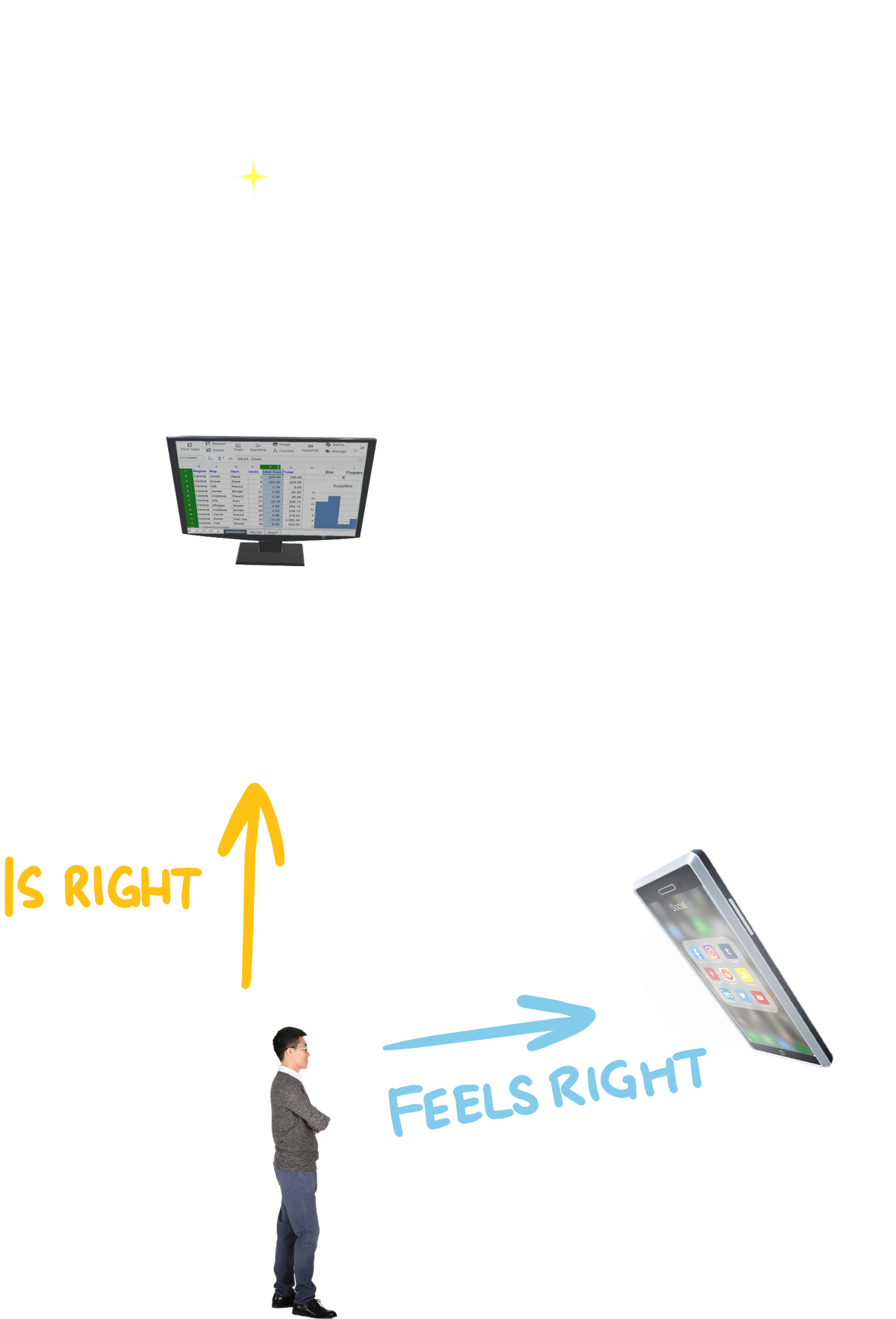
And not unlike the moth circling a porch light, this gets us ensnared in endless dopamine-driven loops of wanting, approaching, consuming.
This happens because there’s nothing to pull us away. There's no real finish line. No sense of completion.On the contrary, it continues to feel more and more right—despite all evidence to the contrary—so we keep chasing and looping and doomscrolling until we collapse from exhaustion.
This point is super important, so I’ll say it another way:With vices, the signal for reward—and therefore survival—is fucking loud. Louder than the quiet call of our North Star.
So it feels right to go after it. It lights up our dopamine pathways, then proves its worth with every instant hit of gratification.
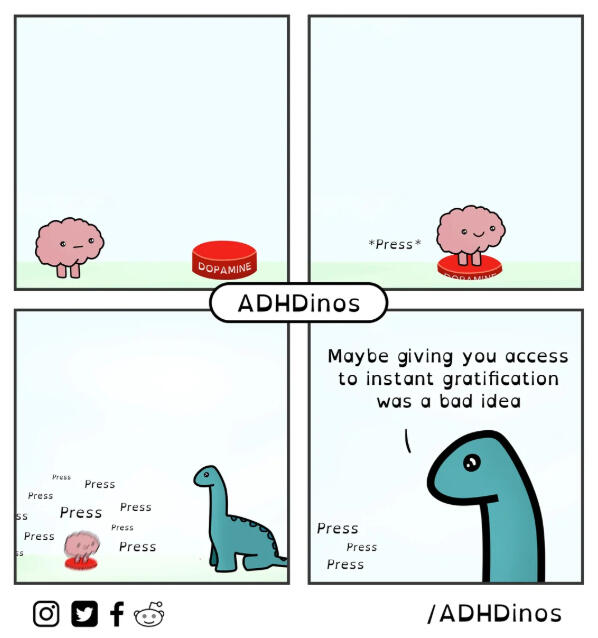
With now years of repition and reinforcement, you've come to greatly prefer it over all other option, including what would be in the direction of your North Star values and ideals.
But the actual potential for survival benefit? It's non existant. Apart from the odd life-hack or whatever, there's no actual substance to gain.
Not only that, with enough time and repititon, it leads to to survival detriments.Chronic use leads to the financial risks of procrastination and underperformance. To the pain of stress and anxiety. To the physical harms of a sedentary lifestyle.
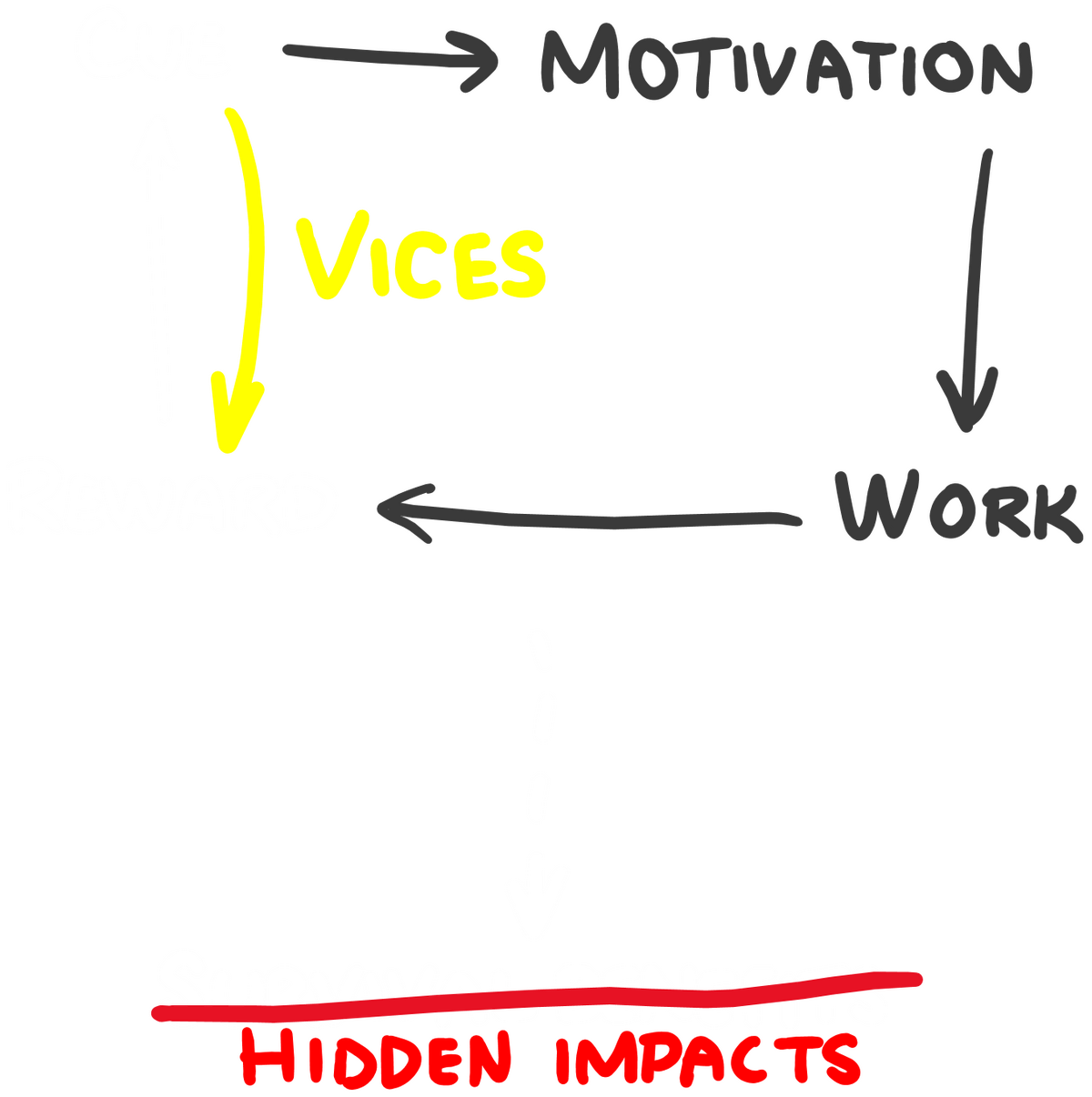
Vices lead to survival threats.
And so, just like our moth friend, we're biologically driven to eliminate that threat. So we circle back to our vices. Because doing so feels right. It's what we prefer to do. Which then amplifies the survival threat, so it feels more right, the preference amplifies, and we return once again.
Then again. And again. And again. Until...
Well, there is no "until".Some of us can spend our entire lives aimlessly spiralling around vices.
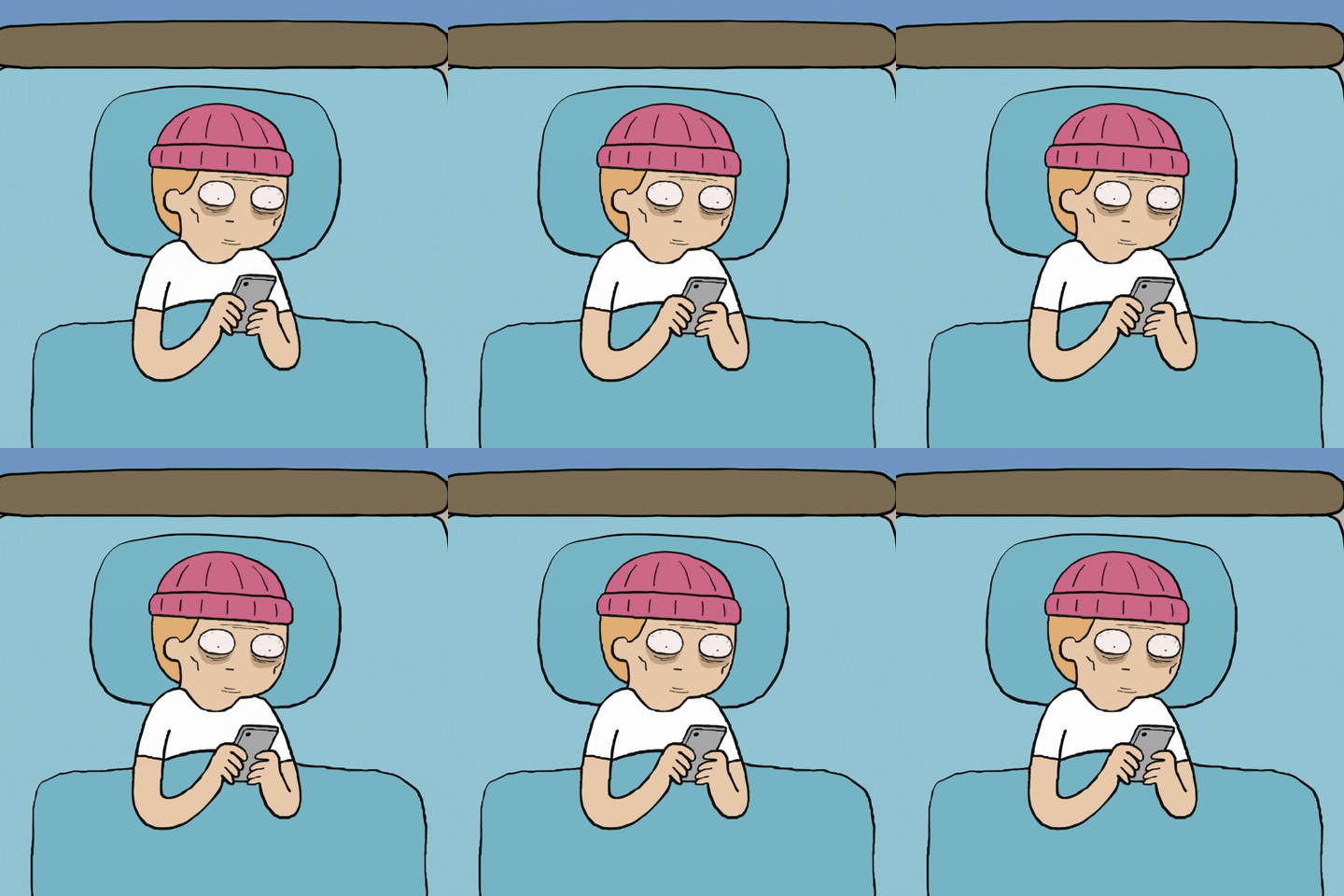
Why you prefer vices
You stagnate because you prefer the actions that make up a life of stagnation.
This is you on your pursuit of happiness, doing your very best, just like everyone else out there.
That's the short of it anyway.
Now, you might disagree.You might say you hate your vices. That they're ruining your life. That they make you miserable and patently unhappy. That you've long ago lost interest and enjoyment in them, so saying "good-riddence" forever and ever is the most tantilizing idea ever.
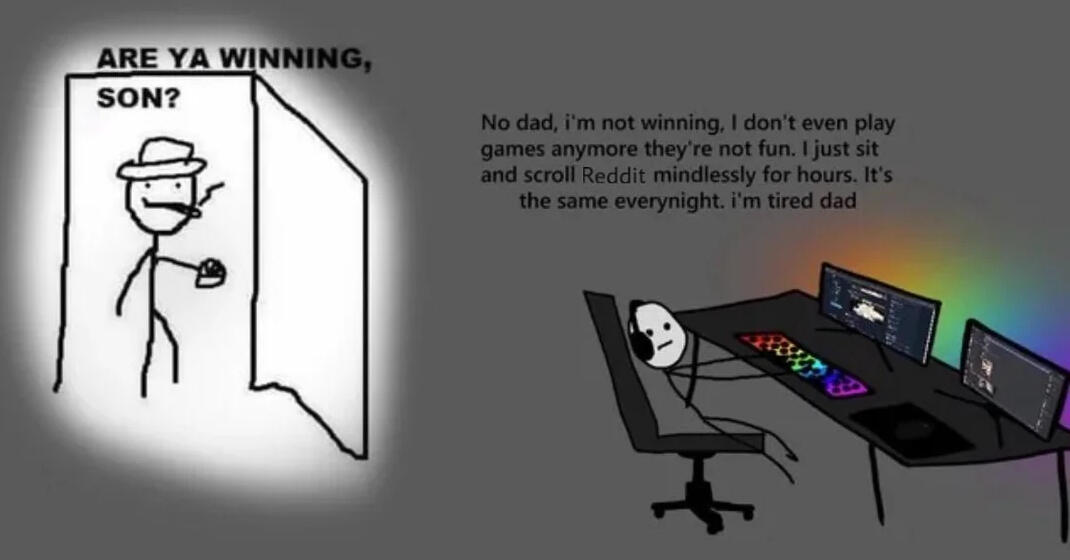
What you actually prefer is a life of productivity and consistency. Of meaningful work and the active pursuit of goals. Of fun low-tech activities and outdoor adventure. Of real socializing with experiences with real friends.
You'd 100x prefer to follow a value-based North Star.You'd 100x perfer not live your current life—a life of isolation, misery, regret, and pain.
And that's true.But what you're neglecting to see is how you can have two incredibly strong preferences at the same time, even if they are in direct conflict with each other.
Like, you can prefer to never scratch mosquito bites because every time you do, you overdo it, and you bleed, and it makes a mess, and it's hella embarassing... but you can also prefer, in a monent of an all-consuming itch, to scratch the living shit out of a bite.
And you can prefer to have lots of vitality and rock hard abs and a super hot boyfriend or girlfriend... but you can also prefer eating comfort food while watching old shows and ingnoring texts from friends asking you to do stuff.
You can prefer each of the thousands and thousands of individual "Micro" instances of indulging that make up your current life of stagnation... while also hating the cummulative "Macro" effects of these indulgences.
It is what it is, and at the core of your Micro-level preference is one inescapable truth: today's vices are fcking good.
The reality is that the tech, media and entertainment industries are investing billions to make their platforms as enticing, enjoyable, and stimulating as humanly possible.
What they produce—or, to be more precise, what the hords of content creators they attract manage to produce—is straight-up good.Not all of it of course, not even some of it. But the top 1% of the top 1% that bubbles up through algorithms and engagement is inarguably enjoyable, stimulating, and fun even.
Denying this reality; gaslighting yourself into believing you hate all of it, just isn't helping. (But that sentiment is understandable since it's always formed at the end of a binge... when you've exhausted all the good content and your preference to continue on expires).
But that's just the half of it. Because mondern vices aren't just good for the sake of being entertainaining and enjoyable. As dicussed in Chapter 1, they're also really good at providing relief and escape from life's stresses.
Your boss sends a scathing email questioning your commitment.Your crush leaves you on 'read' for the second day in a row.Your calendar reminds you of all the impending deadlines and exam dates, but you can't even muster up the motivation to pick up a pencil.
And if it's not some acute like that, it's the random, unprovoked pain and unease we're all made to feel 24/7—the inevitable pangs of being a human, born with this background refrigerator-hum of worries, anxieties and insecurities.
So you grab your phone, TV remote, or pile carbs on a plate... and poof, all of that no longer exists.
Bottom line is, when given the opportunity, you prefer to consume your vices—and you're always being given the opportunity with them always a tap or a click away.You prefer them over the alternative of not consuming them, which will have you miss out on something legitametely good and satisfying, and needlessly sit through discomfort.
So you go for it. You consume them without any hesitation.
And it feels good and right—more good and right than any vague, distant notion of prefering to live a more disciplined life.
This doesn't happen just once or twice in a day. It happens hundreds and hundreds of times.
Which then repeats for weeks, then months, then years.
Which then results in you stagnating.
Deciding to change
So the half-moon glow of your distant values-based goals and aspirations are nothing compared to the stadium floodlights of vices.
Yet you keep trying to disregard your vices because, well, what else can you do?You're not going to give up on a better yet. Not yet.
So, you make the standard set of promises and resolutions, and you renew your commitment with the standard self-help inspired affirmation:
I can do this.All it takes is to just not do what I know is bad.Just ignore what I desire. Ignore how I feel. Ignore my primitive wants and preferences—it's all based on lies and manipulation; on mega-corporations doing all they can to hook my attention and have me look at ads.Every day. Just make a plan and stick to it no matter what... you'll be happy you did.
And then you try. You really do try, because you know in your heart of hearts that it'll all be worth it in the end. If you could just stick it out.
But what happens next?
Well, naturally, the first few days suck, right? You have to deal with the incessant onslaught of urges and cravings towards what you'd clearly prefer using self-control and constant reminders.It's an uncomfortable, perhaps unbearable mess—like trying to bar yourself from scratching a throbbing mosquito bite, all while the ultra-marathon-running-ex-navy-seal author's yelling in your ear like,!!! c’mon man, shut up and just don’t do it.
Meanwhile, outside the habit, life continues to swing from demanding and stressful, to routine and boring.But now…? Relief is denied. No YouTube. No Reddit. No video games. No temporary escape.
You just have to just sit there and take it.

It all feels like an awful, pleasureless, annoying existence; a prison of continual self-monitoring and restraint.And so, you can't help but daydream about the little innocuous things that would give you a break from it all.
Your thoughts would inevitably arrive at :Is this what my life will be like now? Is this how it's going to feel? This feeling… it... sucks. You know, maybe don't want to quit after all.
But still, perhaps that post-it note you tacked on the bottom of your computer screen reminded you to power through with grit and determination. Never underestimate the power of will.The misery could be endured, the cravings resisted, the thoughts ignored. You knew this would happen. Just keep going.
Problem is, with those thoughts endlessly pestering you, plus life delivering its usual gauntlet of stress, boredom, and dissapointments, your inner desire for vices only goes up with time, not down.
To make it beyond day 1, then day 2, then day 3, then day 573... you need to have more and more and more of an ability to resist.Eventually... you give in. No one (but that navy-seal author I guess) has a limitless supply of willpower. All it takes is a convenient little rationalization to present itself:
Bah, 5 minutes on Reddit won’t kill me. In fact, it might make me less grumpy and fidgety, thus more productive.
And with that taste, the dopamine fueled hit—the feeling of blissful relief—feels better than ever.This further solidifies in your mind (literally, through the insulation of neural pathways) that your vices are wonderful, life-saving, beneficial things, and that life without them is not worth living, and that, you should just be more flexible and intentional with you consumption, and, well, what the heck were you thinking, anyway?!?
But then that first indulgence ends. Which leaves you feeling better but vaguely guilty and flustered.

So it's never long before you justify a little more. But that leaves you feeling worst, so a little more, and well... you know the rest.
Here’s the grim reality: every time you try to quit your vices, you end driving up your inner preferences for them. You end up deepening your addiction, deepening the rut that's keeping you stagnating.
You need to do the opposite. You need to do what it takes to drive your preference down with time, not up.
Your ability to resist—your self-control, your willpower—it is what it is and there’s not much you can do about it. The preference side of things—what truly prompts cravings and drives irrational behaviors and compulsions—that can be manipulated to your advantage over time.
The key is to gnaw away at the mental wiring responsible for the preference towards vices so that one day you’ll be like:"Yeah, I see my phone there chiming with all it's easy titillation and gratification... it's not that I'm not allowed to indulge, it's just that, like, I'm good. I prefer not to, so I think I’ll pass. I’d rather just get to work."
No willpower needed.
That, dear reader, is the promised land. That's the mental re-programming that needs to happen in your life for any change to stick.
As I said at the beginning, your problem is not your willpower or self-control. Your problem is your innate preference for all these hyper addictive modern vices.You need to drive your preferences down—not through learning a bunch of theory (you can’t think-out preferences), but through a reframed mindset and a focused day-by-day action plan.
That’s up next.
PART 2 - THE SOLUTION
Virtue consists, not in abstaining from vice, but in not desiring it.
— George Bernard Shaw
Chaper 4: Step 0 - Change your mindset
At the worst of it I no longer wanted to drink and no longer wanted to be sober. I felt evicted from life. At the start of the road back I just tried to believe the people who said things would get better if I gave them time to do so.
— Steven King
Addiction is unquestionably destructive, yet it is also uncannily normal: an inevitable feature of the basic human design… Medical researchers are correct that the brain changes with addiction. But the way it changes has to do with learning and development—not disease.
— DR. MARC D. LEWIS, NEUROSCIENTIST AND PROFESSOR
Alright, so you’re a couple of taps away from getting what you're ultimately here for. But before we get there, I want to say a few things.
First, I hope everything you’ve read so far has landed well. I hope you’re starting to feel a small wave of relief—relief that your past failures, setbacks, and embarrassments weren’t really “your fault” in the way you used to believe. There were larger forces at play.And I hope that gives you enough room to offer yourself a bit of self-compassion, maybe even some forgiveness and self-directed love.

But I also want to acknowledge something honestly: that relief may only be 5% of what you’re feeling right now.The other 95% might be overwhelm; maybe even a deep discouragement given all that's stacked against you.
Of course I don’t want you to feel that way. I want you to feel like you’re in good hands—that you’re about to be equipped with a mindset (this chapter) and a game plan (next chapter) that directly tackles every cause, every obstacle, every biological and psychological force working against you.And you are in good hands. I’ve spent years wrestling this serpant of a problem to the ground, hashing out a solution that actually works.
But I want to be very clear: this problem is complicated. It also runs super deep.There is no quick, easy, pain-free solution.
Solving this thing is going to be challenging. The journey will be long, bumpy, full of obstacles, setbacks, and frustrations. You're going to want to give up.
So let's make that the first element of the required mindset of the solution:
Mindset element 1: This journey will be long and difficult
Look. I'd rather be real with you.
It's tempting for me to pretend like I have some magical solution—some method or technique I can just whisper in your ear, and poof everything is just fixed in your life.
But I don't. And I'm 10000% convinced I won't ever, and that noone will, no matter how many books they sell, or how productive, accomplished or enlightened they claim to be.The reality is your problem runs deep. Like really, effing, deep.
And I mean that litterally: a scientist could probe the inner workings of your brain and find thickly insulated neural pathways associated with your doomscrolling, procrastination and stagnation habits. And these pathways have been painstakinly formed through years (decades?) of repetition and reinforcement.Short of lobotimizing those parts of your brain (I know a guy if you want), there is no easy, quick fix.
And so, because of that wiring, your mind with resist change. It will have you gravitate back towards tried and true habits. Towards ways your primitive brain learned—wrongly of course—is the absolute best and quickest way to not effing die in a cold, dangerous world.It will sabotage you and your neat-little efforts and intentions to be the new you. And it'll do so in ways that'll make your blood boil (and there's no better cure to boiled blood than a sweet-sweet Netflix binge).
So.
You just have to accept and anticipate this.You just do.
Because when life throws at you a fridgerator sized boulder at your face—and it will—you need to know it's okay to struggle. It's okay for everything to just colapse. It's okay to feel like you're back to square one.
It's okay to want to give up.
It's okay because all this junk is now part of the process. A process that will take takes weeks, if not months to really take hold and bare fruit.Slip-ups, failures, frustration... as you'll see, it's baked right into this method.
You better get used to it.
TAKEAWAY MINDSET: Localized slip-ups and failures don't mean the method is failing. They are part of the method.Assume a timeframe for progress measured in months, not days.
Mindset element 2: This journey will iterative
When it comes to a self-help campain, it's natural to want and maybe even expect clean, linear progress, even if the going is slow.
But this isn’t some 14-day program where you do X, Y, then Z until you get results. Like we're not baking a cake here: there's no simple recipe you can follow for guaranteed results.
Those programs always feel promising, but in reality you do X a few times, Y is too hard or cumbersome, and Z just plain doesn't apply to you... then, when whole thing fizzles out, it’s your fault you failed at it; not the magical one-size-fits-all system.
So instead of a straight linear system, we're going to take an iterative approach to self-improvement. This means you do something for a while, you fail, you gain some lessons, then you try again with some tweaks.
Progress looks more like this.
There’s no time limit.There’s not even the ambition or expectation of some end goal of perfection—some fantasy result where you’ll one day have consumed your vice for the very last time, and from then on you’ll be flawless in your lifestyle and productivity.
Let that go.
In fact, it's paramount that you let go of keeping count of streaks (i.e. days in a row without engaging in a particular vice).Remember, the point of the method is to come to a point where you’re ambivalent towards your vice. Would someone who shrugs and goes “meh” at the sight of the TikTok app icon, care to mark a big X on a calendar, confirming she made it another day? Probably not.
Anyway, let's take another look at that plot.

The aim of this method, as in what we want to see roughly over time, is illustrated by the arrows of (5) and (6) and the downwards trend of (7).

That is the overall goal: a gradual widening of the iterations, with more and more time spent where you are (A) consuming your vices in a reduced yet steady clip… and (B) there's a gradual drop in the intensity and time spent in binges or excessive territory when things spiral away from you.

Eventually you will get to an iteration that spans several days, or even weeks (or more), but this may take several tries and lots of time, months or longer for most, and that’s perfectly OK.

What’s important is the overall trend. We want—overall, on average—for each iteration to get a bit wider than the ones before, for the ‘failures’ to not be so bad each time, i.e. for you to be able to pick yourself back up and start-over faster and emotionally unscathe.

Key takeaway: the method is less about learning to stay on the horse. It's about learning how to manage falling off.
Mindset element 2: Self-compassion is essential
You can think of this method as akin to meditation, the rules of which are pretty straightforward.
Rule no. 1: Focus your attention on your breath.

... That’s it.
The genius thing about meditation, however, lies in its unspoken rule: you’re sort of allowed to lose focus.

Of course, this unspoken rule directly contradicts the one hard rule, but somehow the practice still holds. That's because with meditation, it's not just okay if you falter; it's entirely expected. In fact, the act of "picking yourself back up when you falter" is itself the practice.
In other words, if you were to think of meditation as type of exercise, a "rep" would be the act of bringing yourself back to focus (rather than the concentrated time stretches in between).Therefore, the more you slip, the more "reps" you'll do, the stronger you get at the practice.
This, of course, depends on one thing: whether or not you're able to apply self-compassion.
In meditation, self-compassion is key. Without it, you’d get frustrated at how often your mind wanders to thinking about your grocery list or that work deadline. Then with that frustration, you’d have more thoughts and emotions, further distracting you from the task at hand.You're taught early on that random thoughts and reveries are natural and expected. So compassion is not just what you should do to be nice to yourself, in meditation it’s altogether required.
The same is true for the bigger picture of life. Growth and strength comes, not from when you're living perfectly, not from when you manage a 30-day streak, but from the times you "catch" yourself in a distraction, and when you revert back your focus.It also happens when you fall--when you, say, doomscroll and waste an entire workday--but then you pick yourself up, recommiting to the process I'll be sharing in the next chapter.
Now this doesn’t mean you're allowed to deviate and indulge in vices all willy-nilly.No, as you'll see in the next chapter,...It’s the same for you and your commitments to change your habits. As you'll see in the next chapter, Step 1 will be to make some firm decision , but don’t ever forget that you are human, and that humans evolved to act on instinct and grab at rewards for survival.Once you let go of striving for perfection and allow for some self-compassion, a funny thing starts to happen. You’ll start to see the vices for what they are. Tittilation. Sometimes it's good tittilation, sometimes it's bad. But it's always just tittlation.Much of the reason we actually engage in our vices is a way to relieve or distract away bad feeling, so if you lose the stress and regret of your willpower failings, you’ll lose a lot the inner turmoil, and the reason to indulge in your vice.This is a key element in our aim to have our bad habit just sort-of sort itself out....KEY TAKE AWAY: just like your mind will wander in a meditation session despite that one simple rule, you are going ‘wander’ and do things impulsively. When you catch yourself in the act, keep calm, be compassionate towards yourself, and return to the breath.Each time you do that is a rep. It's a rep towards the strength and stamina you need to live your best life over the long-run.
In meditation, there's just zero need for self-criticism. Because a side goal of meditation is to detach and observe firsthand the frenetic circus that is the mind. Random thoughts and reveries are natural and expected. Criticizing ourselves for this is like criticizing a lion for being ferocious. This is just its nature.No, our job with meditation is simple: sit and observe it all happening inside... then try your best to maintain focus, gently reining it in when it deviates.
As you'll see in the next chapter, setting clear-cut rules is entirely essential, but you also need to embrace the unspoken rule that says: it’s okay to slip up. It’s okay to deviate.You need let go of the fantasy of being perfect forever. You need stop punishing yourself for breaking a streak that no one’s tracking but you. You need accept—and even expect—that you’ll falter. That you’ll binge, scroll, or spiral. And instead of shame or reprimand, you need to meet it with understanding and self-compassion.
As with meditation, the skill to gain here isn't the ability to sustain perfect adherence to the rules. No, the skill is honing your ability to catch yourself when you deviate, and to return to the proper path as quickly and painlessly as possible.
TAKEAWAY: So our job with meditation is simple: sit and observe it all happening inside... then try your best to maintain focus, gently reining it in when it deviate.you'll have rules, just like in meditation. But I carry with me the unspoken rule to be compassionate with myself when I do the equivalent of losing focus on the breath. I gently detach from my vices when I catch myself doing it, I allow for some compassion and I revert my focus to what I know I’m supposed to do.
Mindset element X: Train your preferences to be context specific
You probably prefer Coke over Pepsi, or Pepsi over Coke.Maybe you prefer Jimmy Kimmel over Jimmy Fallon, or maybe you're just a neither sort of person.In your life, you have preferences.And the thing about preferences is simple: you can’t just change them because you feel like it. Because you decided to. Because you, like, ought to.See, preferences live in the subconscious. They’re prepared in parts of the brain you don’t have direct control over. You can't just say, “From now on, I'll prefer Pepsi over Coke,” and magically make it true.It’s the same thing with your habits around vices.In the moment—when you’re triggered, bored, or something suddenly seems like a good idea—you to genuinely prefer the vice. You genuinely prefer consuming the vice over not consuming it. You prefer the quick dopamine hit over doing your work.You can binge all the motivational videos you want. You can read all the inspirational books you want.They are not going to change your preference.But what you can do is start a campaign to gradually challenge that preference, not in general, but in specific contexts.For example, while I have no idea how to change a preference for Coke versus Pepsi, I do know how to develop a preference for sparkling water over soft drinks with dinner—because that happened to me.I love soft drinks. I absolutely love them.But I rarely drink them with dinner anymore.Why?Because I just prefer not to.Unflavored water or sparkling water with a bit of lemon isn’t as stimulating as an ice-cold Coke. I can't change that. But the aftermath? Coke makes me feel sluggish. It doesn’t leave me feeling great. And it clashes with my long-term goals. So across hundreds of everyday dinners, I built up this inner bank of reasons why water is simply the more appropriate choice.Take me to a burger joint, and sure—I’ll gladly take a Coke. That preference is still there. But in the context of a normal Wednesday-night dinner? I prefer water.Because it’s more appropriate for that context.And that’s the real point:your preferences can become context-specific.The same applies to me and YouTube—one of my biggest vices.Right now, while writing this, I actually prefer writing over watching YouTube. Not always. But in this context, working on this project is so much more aligned with who I want to be—my goals, my dreams, my desire for a better life. Writing gives me meaning, momentum, and direction. YouTube gives me some fun if perhaps a momentary escape.That doesn’t mean I’ve banned YouTube from my life. I love YouTube—just like I love Coke.I’ve just trained my preferences so that they’re tied to the situation.When it’s the right time, YouTube is great.When it’s not, the preference naturally leans toward the thing that moves my life forward.→ Preferences take monthgs to retrain! Hence the first warning!
### Self compassion based weeningAverage out the iterative approach until the peaks and valleys are flattened out… you get a natural, unplanned weening.this is the method: to expect yourself to fail without sanctioning it. Every rep is your ticket to getting better. That’s what actually counts. It’s not the streaks. It’s the number of reps. reps are King.In a sense, this is exposure therapy. Whenever you can, you’re exposing yourself to the discomfort of rejecting a preference. And then you’re exposing yourself to the benefits of doing so fully slowly ever so gradually, and however, long it takes for you specifically, You’ll slowly build a preference towards less than less vices.### Accidental moderationMacro micro convergence- macro you might say that the best life is zero vice.
- Micro you will disagree constantly
- Mission is to find the middle ground truth for best life
Mindset element X: Anticipate and manage the internal Macro vs Micro tug of war
What I’m coming to realize is that the ideal form of consumption is to designate one day per week where you allow yourself to fully indulge. I’ve found this to be the sweet spot. Because if you try to moderate every single day, you end up bouncing between wanting more and forcing yourself to stop—day after day. That’s a tremendous drain on willpower. It’s a constant battle between the part of you that wants to keep going and the part of you that knows it always turns sour.So here’s the key: choose one weekly indulgence day where you can enjoy your vices to your heart’s content. And surprisingly, you’ll find that even on that day, the binge won’t last as long as you think.On all the other days, you simply acknowledge your preference—you notice the urge, you note that of course you’d rather indulge—but then you reinforce that today isn’t the appropriate day for it.
For me, it’s Saturday. So by the time Saturday rolls around, I’m genuinely stoked. When I finally open Reddit—sorted by “Top of the Week”—I’m greeted with an incredible lineup of legitimately good content. Same thing with YouTube: a full week’s worth of top-tier videos waiting for me. Instagram too. Boom—an actually solid feed, full of useful, interesting stuff.That’s the point. If you’re not excited for your vices, then either A) you probably shouldn’t be consuming them in the first place, or B) you’re consuming them too often for them to feel special. Make them special. Give enough time and distance for anticipation to build.It’s not a “cheat day” if you’re not cheating—it’s only a cheat day if you plan for it.
You know how I landed on the one-day-per-week rule? It’s not because I read it in a book. It’s not because I found it in a research paper. I didn’t borrow it from anywhere. I got there through trial and error. This is what works for me—what I’ve personally found to be sustainable.You’re going to have to find what works for you too.You need to allow for a real tug-of-war between your macro-desire and your micro-desire. Your macro-desire says, “This is what leads to my ideal life.” But your micro-desire says, “Actually… no. Given the current moment, the current circumstance, this is what I prefer.”Your macro-desire lays out what’s appropriate.
Your micro-desire pushes for what feels good right now.And once in a while, you’ll think, You know what? This doesn’t perfectly fit my macro-plan… but I genuinely prefer this, and I think it’s still appropriate. So you try it. You test it. And one of two things will happen: you’ll be right… or you’ll be wrong.If you’re wrong, that’s not a moral failure. That’s not stupidity. That’s not weakness. That’s just a data point. You made a reasoned choice using your logic and your best judgment. You tried something. It didn’t work. Fine—bank it. Learn from it. Maybe that’s a lesson you’ll need to learn again once, twice, three times… maybe twenty-eight times. That’s life. Life is just learning lessons in different shapes until they finally click.So don’t take my word for it that once per week is the best. Go learn it the hard way if you want. I genuinely don’t care whether you learn it the easy way or the hard way. What matters is simply that you learn it.And as you do, give yourself compassion. Remind yourself: This is me gathering the data points I need. This is me figuring out how to change. This is me becoming the person I actually want to be.
Mindset Shift 3: Vices aren't bad.
Not “never”—just not now.
I want to focus your attention on this part of the plot.There's some level that's best. Tug of war to discover (recording)
Mindset Shift 3: It's your belief about self-control that matters
https://chatgpt.com/g/g-p-691dc213da908191920ecfbf8369d5d0-dictate/c/69286427-f2b4-8328-aa02-d652cb45364bI have a long history with website blockers. For years, I took it as a given that they were absolutely necessary — no questions asked. Yet this method doesn’t rely on them at all. And there are two reasons for that.The first is purely practical. It’s the alcoholic-working-at-a-bar problem. Website blockers create a constant whack-a-mole dynamic: they work until they don’t, you block one thing and another pops up, and sooner or later you’re stuck in a situation where you actually need access to something you blocked. It becomes fragile, inconvenient, and easy to work around.But the second reason is the important one — the one that actually matters for long-term change. When you rely on website blockers, you’re quietly undermining a core target of this entire method, and honestly your entire self-improvement journey. You’re outsourcing the job of restraint. You’re reinforcing the belief that you can’t control yourself, and that something external has to do it for you.Blockers don’t just block websites. They block the development of the belief that you can handle yourself. And that belief — that growing sense of internal control — is one of the most valuable things you’re trying to rebuild here.
1. Practical:
-> vices are entwined with your work. It's not like an alcoholic who can just rid the house of alcohol and avoid social drinking environmenta.
-> AWAAB predicament: vices are in your place of work. In your home. In your pocket 24/7.
-> cant block it outright...
- you may need for your ambition
- baby w bath water
- whack-a-mole
- override, disable, uninstall
Mindset Shift 3: Moderation, by definition, sucks
If you eat a bite of office cake, and say that's enough because you don't really want more, that's not moderation... even if to the fat guy sitting next to you in accounting it is.REcording for rest.
Mindset shift 2: The destination is you living your best life (not becoming some Willpower-Warrior)
Just because this journey is long and challenging doesn’t mean it won’t be worth it.The goal here isn’t to turn you into a willpower warrior who constantly fights temptations for the rest of your life. That’s not living.The goal is for you to build your best life—one filled with happiness, meaningful work, cool experiences, and yes, vices in moderation. Good art, good games, good shows, good TikToks—whatever makes life richer. None of that has to disappear.
Chapter 5: Steps 1 to 6 Apply the Mindset to life
As you will see, in some cases pursuit means actively doing nothing.
— DR. ROBERT LUSTIG
As is the case with all human behavior, distraction is just another way our brains attempt to deal with pain. If we accept this fact, it makes sense that the only way to handle distraction is by learning to handle discomfort… Time management is pain management.
— NIR EYAL
For two weeks in the early summer of 2016, I ate nothing but—clears throat—potatoes.
That’s right.For 14 days, I ingested potatoes, water, and nothing else. No oil, no salt, no ketchup. Just potatoes.
I did this half as a joke, half as a sort of experiment.Now, I obviously don’t recommend trying this. But the whole thing ended being up as revealing as it was ridiculous.
I've been on countless diets before and since then, from hyper-regimented paleo-keto-something programs, to the vague "I just need to eat cleaner" intentions. And this one, this ludicrous potato diet thing, was the one and only one I’ve ever stuck to without a single instance of cheating or slipping.It was also surprisingly easy—fun even.
You probably didn't expect that. I certainly didn’t.I pictured myself on day eight, emaciated, hair thinning out, eyes sunken into their sockets, glaring at a cursed potato sac, musing maniacally—through the mental fog of severe protein deficiency—what it would take to nuke the entire state of Idaho.
But that didn’t happen.
On day eight, I was fine.By then, I had down pat my little routine of toasting the little wedges just right—Yukon golds became my favy-favs—to get that nice outer crunch and steamy-soft center.By day 12, I had the giggly thrill of ordering a plain baked potato, no oil, no salt, no nothing, at an Irish pub.
Then, on day 14, it was simply done.Sure, I was happy it was over, yet I wasn’t pining for the misery to end.I just went back to normal food—first thing I had was a celery stick which, wow, pure flavor explosion—and moved on.
Anyway, once the ordeal was over, I spent some time reflecting on why the experiment was so unexpectedly easy compared to my other diet experiences. Therein, perhaps, lay some nugget of Yukon Gold wisdom.
I realized two things:
here was inarguable proof that many of my issues wasn't about self-control or lack-thereof.
It was so counterintuitive. This is was, by far, the most restrictive I had gotten with food, and yet it never felt like I needed to force myself or employ willpower.I was just curious and having fun. I had a mission to accomplish, stupid as it was. Avoiding food—the stuff I consumed for decades before, and would consume for decades after—was easy-peasy. Abstaining what I simply prefered to do.No. There was always something else going on with my bad habits, relapses, and binges. And now I knew it had nothing to do with self-control.
The ordeal was easy because, rather than having to make a thousand judgements and decisions throughout the day as with my typical eating, I had already made all the decisions on day 1.
Think about it.
Like, think about the last time you sat at a nice restaurant. Perhaps you were at the start of a health-kick with a renewed intention to "eat better" and consume less junk.From the moment you sat, to the moment you were handed the cheque, you were constantly confronted with a flurry of options—decisions to make while balancing your goals of “eating better” versus "living life to the fullest".
Is diet soda? okay?Beer has carbs, but is that like sugar?I've been good all week, maybe I can cheat a little and get a small Coke now that I'm at a restaurant."Damn. There's the bread. I really shouldn't... but we can't let it go to waste...*Blueberry cheesecake you say? That has pro-oxidants… or is it anti-oxidants? Either way, I need that stuff to not die, right?
On and on, all night, your mind is nagged to make decision after decision after decision.
On and on, all night, your mind is nagged to make decision after decision after decision.The problem is, as soon as you rationalize something once—okay, a little dessert is fine, even if I promised to cut-back on sugar—you set the precedent, giving your subconscious permission to do it again and again.
As the days go, the excuses pile up. Your rules and boundaries weaken and widen, and soon enough, you're back to your previous lackluster eating habits.
Isn’t that what life feels like 99% of the time?It's this eternal conga-line of decisions to make, judgement calls to weigh out, rationalizations to swat away like pesky flies. Like making a choice between forty-two types of toothpaste at the pharmacy, it can all get quite exhausting.
Compare that to my potato-diet. For that thin slice of my life, it was all so wonderfully simple and liberating. I had but one, easy, black and white, 1st-grade-level question to consider when it came time to eat:
[Holds up a can of soup]… Is this thing a potato? No.[Holds up an apple]… Is this thing a potato? Close but again no[Holds up a potato] … Is this thing a potato? Ou! Ou! I learned this in Miss Spiegelman’s class! It is, it is! Ok, into my mouth you go, Mr. Potato man. Num num num.
So, what's the lesson, here? What's the “advice” we can extract from my ridiculous experiment?When beginning any self-improvement journey, it’s crucial to do all you can to reduce the instances of decision-making in your daily life.It's better to decide once, than have to make 1000 decisions all day.
So that's where we'll start.
Step 1: Decide
The definition of irony is assigning a bunch of homework to a group of readers whos precise problem is the inability to do homework.
But we have to start with something concrete and written, so I'll aim to make it as minimal as possible.Your task here is to:
Consider your goals and ambitions
Make decisions about what it'll take to achieve those goals and ambitions
Write those rules down.
As far as goals (e.g. lose X pounds) and ambitions (e.g. earn a livable monthly wage as a freelancer) go, chances are, you're in one of two camps.Camp 1 folk know what they want. They have super clear interests, passions, maybe even talents. They have big, lofty aspirations. They know exactly who they want to become and are willing to pay the price of admission (if only they had the motivation to do so).
Camp 2 have zero fricking idea. Maybe they long-ago had interests and talents, but that's all been trampled out by years of wasting time on trash.Or maybe it's not even that. Maybe you were just born with a smartphone in your crib and so you were never given the opportunity to even develop an interest on anything niche.
Either is fine.
You Camp 1 folk can commit to paper the processes needed to advance you toward your goals: routines, systems, habits.
Just keep it concrete and simple.
Camp 2 can just jot down a few generic productivity, health and wellness habits they think would be beneficial.Work-sessions rules, weekly exercise goals, daily habits like journaling, going for walks, cooking, meditating. Whatever.
Or not.Like for real, no judgement if, for the life of you, you have no idea what it is would make your life better. If you're in so deep of a rut of despair that you can't see through to the surface, let alone a distant North Star shrouded by thick clouds of depression, self-judgement, and jadedness.
From there, the focus can shift to vices.Remember not to judge your vices as uniformely good or bad. You currently have a preference for them, so they are, by definition good.
The journey ahead is to work on that preference slowly, if life teaches you it needs to be done, but for now, it is what it is.What needs to be made crystal clear at this point are the contexts in which they are appropiate and the context in which they are inappropiate.
What's your Macro self saying here? What, from your current perspective of thinking of your life, your goals, your ambitions, would be best?
Try your best to be as concrete as possible. You don’t want vague instructions like “consume less tech” or “work out more” or “be more productive.”Remember why my potato diet was so "easy" despite it being the "hardest" diet possible. Zero decisions. No thinking. No negotiations. No “what should I have for lunch?” The simplicity was the strength.You can make it as ambitious as you want or as loose as you want—it really doesn't matter, because this is just a starting point.This is your least accurate guess at what your best life might look like.Think of it like machine learning: you pick an initial model, run it in the real world, see how it performs, and then iterate.The real world is the arena where you're pitting your two selves against each other.There's your Macro self, the version that says, “This is the life I want to live.”
There's your Micro self, the version that says, “Okay, sure, but right now I think a small deviation might be better.”Then life plays out.One of them gets proven right—which yes, will often be the Macro... but not always.What's important is that both are friggin stubborn. It takes dozens of iterations, dozens of bits of evidence, for one to finally yield.For me, after months of testing, I landed on what works: zero Reddit, zero YouTube, zero news, zero Instagram during the week—and a free-for-all on Saturdays. That’s it. Concrete. Clear. No exceptions. No judgment calls. No having to moderate.Earlier iterations had little daily allowances—Instagram at lunch, news in the morning—but every time, without fail, they’d expand. A little bit became a little more, and then a lot more. Moreover, I was getting tired of the work and discomfort of moderation.Eventually I came to accept reality: those daily allocations didn’t work for me.And once it finally clicked—after dozens of iterations—it just stuck. Sure I’m not perfect—my Micro self is a bit of a dick sometimes, but I’m phenomenally better.
Anyway rant over.Last thing before we move on: I'll leave it up to you how to do this step. How you write this out.On a physical paper is fine.Digital is fine.It just needs to be visible whereever you do work. And editable (or else easy to edit, scrap and reproduce).I like to keep a simple Notion page (feel free to duplicate). I then take screenshots and set it as my desktop background. I like having my commitments are there when I start my work sessions.
Step 2: Wait
Part 1 of this book made some pretty bold claims. It basically stated:You know that demotivated sensation that hits you right when you want to work?You know how you struggle to maintain focus without getting bored or impatient?You know how your brain has just given up on producing serotonin?Yeah, well, all that’s caused by one thing: your vices.Therefore, if you managed to end your bad habits, then you can and should come to expect the opposite result:You’ll unlock newfound levels of energy and productivity!You'll enjoy new realms of happiness and peace of mind!You’ll be transformed into the, newer, better, awesomer you!But the problem is, that transformation... it doesn’t happen. Not right way.In fact, cutting out your vices in Phase 1, which by now you might already be itching to do, will likely leave you feeling worse than before—not better.
I think you already know what I’m talking about. Just recall the last time you vowed to cut out your vices. Think ambitious New Year’s Resolutions and “I’m concerned about your blood-pressure” doctor visits, that sort of thing.Since you’re reading this, it’s safe to assume that your previous attempts failed. It may have happened gradually or all at once, but at some point, you simply reverted to your old habits. Feeling frustrated and self-critical, you instinctively blamed yourself for your lack of self-control and discipline.Yet, it was actually the unexpected arrival of negative feelings—lethargy, unhappiness, irritability—and the thoughts, urges, and excuses they provoke, that caused everything to unravel.Laura McKowen describes this perfectly in her book We Are the Luckiest: The Surprising Magic of a Sober Life:
In the first year of trying to get sober, I was tired all the time. Not the adrenaline-fueled tired I used to feel when I was still drinking, but something more weighted and bone level, like the flu... More than once, I called in sick to work because I simply could not drag my body there… I slept eight, ten, twelve hours a night… And although I would have occasional bursts of almost manic energy… mostly I felt like I was slogging through mud.I found this to be so frustrating and unfair because it seemed like now that I wasn't drowning myself in wine every night, life should automatically be… easier. Better.My body should feel like a demigod’s. I wanted the energy to do all the things lighting up my brain: write more, start a podcast, start my book, fix up my apartment, clean my car, paint my bedroom, find a boyfriend, live—but most days, I could barely make it through the afternoon without crying.
You need to expect this. Expect the Vice Flu.Why? Because it's during our darkest moments of mental confusion and frustration that the first spores of rationalization and excuses begin to form—like mold and rot that thrive in dark, damp environments. It's there, in that place, where you'll first encounter that twisted little thought, like:“You know… maybe this whole 'Giving up social media, videogames and junk food' thing isn’t a great idea. I mean, look at how crappy and tired I now feel. I’m worse than before. Maybe I’d be better off—happier, more at ease, and even more motivated—if I took back my innocent little pleasures. Maybe I don’t want to stick with these commitments after all”.With thoughts like these, no amount of “willpower” or “self-control” will help. Once rational excuses form, once you return to a belief that you’d be better off with your vices than without them—because you’ve found evidence in those awful moods and feelings—it won’t be long before you give in and fall back to your old habits.
I’m tempted to use the term “withdrawal effects” here, but that’s not it.Unless your application of the method involves giving up drugs, alcohol, or heaping amounts of sugar, you’re not going to experience any physical effects. Yet, even in that case, withdrawal effects—though potentially intense and dangerous—are temporary and treatable aspects of recovery.So, what’s up with this sudden drop in happiness and well-being? What is it that, as McKowen puts it, weighs you down and gives you flu-like symptoms?You have to understand that you began your bad habits for a good reason. They started long ago, probably in your early adolescence when you learned that indulging in your vices could provide an escape for everything that pained or troubled you: insecurities, stresses, disappointments, worries, anxieties.Maybe they also offered a respite from painful memories; from trauma, abuse, neglect, and the relentless pressure of your parents and their impossible expectations.Or maybe it didn’t start off that way.Maybe, like me, you started playing Super Mario because it was fun. Yet, it didn’t take long before your subconscious began to associate 'fun' with the added bonus of 'escape'. 'Fun' was etched in your brain as an easy way to pacify, for a while anyway, the stress, discomfort, and insecurity you began to feel as a fledgling human in a big, cold, and scary world.So, now as an adult, you game to have fun and as a means of escape—that is until it's past 2 am and the game has long stopped being enjoyable and is now just a means to delay the onset of a cold and dark reality.Simply put, you learned to use your vices as a coping mechanism. And it worked—it still works. It's just that now, the habit itself provokes its own slew of ill consequences, such as the stress and panic of procrastination, the regret of wasted opportunities, and the health effects of a sedentary lifestyle... which, in turn, demand increasingly more doses of vice for relief and escape.So, it’s natural that, once you quit your vices cold, the pain and discomfort they so expertly suppressed will creep back in, resulting in an 'I’m doing worse now' living experience.
If the problem is the sudden arrival of negative emotions, what, then, is the solution?First, as I've mentioned, becoming aware of this is extremely important. This whole phenomenon truly is unexpected. As you embark on the method and enter Phase 1, anticipate and brace for negative sensations and thoughts, which might only arrive and peak on day two or three, and will likely last a few days to a week.When it hits, treat it like the flu. Let time pass. Give yourself permission to rest and sleep. Give yourself permission not to start a million good habits, not to chase your dreams just yet, not to get all busy and productive just because you stopped with the bad stuff and that’s what everyone says you need to do next.Whoever first said that it's important to replace bad habits with new, good habits was for sure an 8 out of 10, talking to his 7 out of 10 tennis partner. This works for them but not for us 1s or 2s.So, don’t pretend to be all swell, chipper, and grateful for every blessing of a breath, just because you’ve convinced yourself this is how you’re supposed to feel now that you’re “free” from vices and bad habits.Just allow what is to be.Allow time to pass, and since that won’t always be easy during Phase 1, give yourself permission to “tier down” with your vices.
I found a common, yet oddly unspoken theme in pretty much all the sobriety memoirs I’ve read throughout the years. Once the writer has given up alcohol, they allow themselves to indulge in lesser comforts. Think Netflix binges curled up under layers of blankets with a Costco bag of Sour Patch Kids.They do this to help cope with the bad feelings the alcohol once pacified—and it's okay, for a while at least, because all that matters is they get through the difficult early stages of abstaining from their worst and most impactful vice.You should do that too.To help get through the pain of Phase 1, give yourself full permission to "tier down" with your vices.Tier 1: The Hard StuffTier 1 vices are the more traditional and destructive behaviors, many of which have been around for centuries. These include alcohol and drug use, smoking, and gambling. These behaviors are often highly addictive and can have severe consequences on one's health and life.Tier 2: The JunkTier 2 vices are seen as relatively benign, but as discussed previously, their impacts are insidious and occur gradually. Examples include streaming TV shows and movies, YouTube, Reddit, social media, junk food, and pornography. The main difference between Tier 1 and Tier 2 is that Tier 2 vices serve to provide shortcuts to specific survival rewards like sex or status, whereas Tier 1 is aimed at a more generalized anesthetization or feelings of well-being. This is why pornography is regarded as Tier 2, despite, for certain people, the severity of the issue.Tier 3: The Passive StuffTier 3 vices include reading books, listening to music or podcasts, solving puzzles, engaging in hobbies, healthy snacking, and taking online courses. They are not harmful and can even provide benefits when done habitually. Nevertheless, they can still be considered vices in cases where they are used as a means to escape from discomfort.
So, if right now your vices happen to be Netflix binges and Sour Patch Kids (i.e. Tier 2 vices), then go ahead and allow yourself to indulge in a fantasy novel or lie down while listening to an old rap album you loved as a teen (i.e. Tier 3 vices).As you’ll learn next, dealing with the source of the bad feelings is going to be difficult and quite taxing, but nobody has the stamina to grind through this 24/7. You can’t be faulted for needing to take a break with a little distraction.Just ensure that the consequences of your coping vices are an order of magnitude less than the consequences of your original vices.That’s the key. When "tiering down," what matters is that the medication's side effects are acceptable relative to the original issue. Sure, you might gain weight after quitting cigarettes, but that's better than gaining a tumor in your lungs. You can deal with that later. And sure, you’re still procrastinating if you're listening to music and podcasts all day, yet it's preferable to the continuous dopamine hits from compulsive TikTok scrolling.The purpose of this period is to allow your Procrastination Inducing Symptoms to dissipate. We just need to kill some time in Phase 1 until the seeds of motivation take root and begin to sprout. You can do this with any Tier 3 vices of your choosing.
If the second-best thing to do during Phase 1 is to killtime with a tiered-down vice, the first-best thing is to do nothing.Sit on your couch, stare at the wall. Go for a long walk.Take a day trip out in nature.From there, your job is just to let everything internal—thestuff you've been impulsively escaping from and relieving with yourvices—surface and run its course.You can do this by simply observing. By observing yourfeelings, and emotions. By sitting with your frustrations, stress, regrets,worries, and fears. By listening to the thought loops without judgment.Feel the cravings. Get curious about what they feel like inyour body. “Look” at the feelings of hopelessness, apathy, or depressionitself.Through this act of gentle but deliberate observation—ormindfulness as it’s often called, more on that in Part 3—you’ll be able to takea seat in the back row of your mind’s very own three-ring circus.This is different than how you and I normally live.Normally, yeah, we might “go” to the circus. But we find ourselves tossed intothe ring with the obnoxious MC, evil clowns, and hungry tigers. So, think ofthis as an occasion to attend the circus—that mandatory human experience—whilegiving yourself permission to just sit way up in the stands and observe thechaos from a distance.After a little while, if it gets boring, repetitive, orintense, step out of the tent and go for another walk, crack open a book, orlisten to an old album. Come back for a little more mindful self-therapy asneeded.
Last little thing to consider before moving on.
You know what I find to be both the strangest yet most consistent thing about recovering from tech addiction and dealing with depression?When I find myself waking refreshed and optimistic—when I've gotten the ball rolling with a few focused work sessions or workouts, or when I’ve made it a solid ten days without overindulging in my vices—I can't imagine a future where any of that could change. The notion of going back to a dark and depressed rut feels impossible; the idea of watching crappy YouTube or TikTok videos for hours is absolutely repulsive.The reverse is even more true.When I'm feeling down and out—when the dark clouds of hopelessness, self-contempt, and disinterest obscure everything positive; when my motivation is down to negative 1000 and it feels like I couldn’t pry myself away from my vices—I’m utterly convinced that this is how I will be and feel forever. I can't imagine a future where I am hopeful, energized, and free from my compulsions.In short, however, how I feel mentally at any given moment is how I expect to feel forever. Any deviation is unfathomable.But your inner state is never permanent. It ebbs and flows naturally like the ocean tide, despite feeling like a storm with no end in sight.I mention this to remind you that your Vice Flu periods (yes, there will be more than one) won’t be permanent, even if it feels that way—and it will feel that way. Time will pass, and so will the sentiment and its accompanying gloomy outlook.The flu period will suck. It might be hard. It might feel like you’ll be stuck feeling that way for life. So, when you're caught up in it, just remember that things will get better.Whereas in the past you may have reached for your vice to relieve these bad feelings, only for them to come back even worse, this next time you will just observe it and let it run its course.This time, you'll know what to do.
Step 3: Accept
The way you've been approaching self-improvement makes perfect sense.You don’t like your current life. You don't like the way things are going—from your day-to-day behaviors and habits, to your vision of what your life will look like a month, a year, or five years from today.So, you want to use that dislike; to leverage it and get it to induce self-discipline and propel you towards a better life.I hear you. I’ve been there.Perhaps you’re on a career path that doesn’t interest you. At times you friggin' hate it. So, you want to use that hate to push you into working on something you’re actually passionate about.Maybe your self-image is at an all-time low. So, you want to use that disgust and discontent to drive yourself toward better habits.And, of course, you compare yourself to others—we’re human, and that’s just what we do—so you want to use the envy and resentment to fuel your actions and get a slice of their happy pie.Like I said, your logic makes sense:I don’t like the way things are going today... therefore I will change using that dislike as fuel. I will use the pressure of resentment, pain and yearning to climb out of my eternal rut.The thing is—and I learned this the hard way—this doesn’t work. You’ve probably tried it, too, haven’t you?But it doesn’t work, because motivation isn’t fueled by negativity.Negativity does only one thing: it drives you to vices.
But wait.Unsatisfied people do make changes, right?The obese guy loses 150 lbs. The alcoholic cleans up and now spends her time sponsoring others. The delinquent teen changes course and becomes a successful entrepreneur.How?Here’s the thing. Here’s what took me years and immeasurable struggles, pain, and denial to realize and fully accept: Positive changes in behavior, leading to tangible life improvements, only happen if you are perfectly content with the way things are.Let me say it again.Positive changes can only happen once you’ve accepted the way things are.“Huh? That makes zero sense. I mean, why would anybody make changes if they were content with the way things are?”You can see it as another one of life’s cruel paradoxes—one that makes perfect sense once you experience it.Motivation only works forward. It won’t show up if you’re obsessed with wanting to move away from a life or career path you hate and resent.It’s a cat. It won’t come if you chase it—if it senses your desperation and neediness.No, you have just to let it be. First, you have to figure out how to be at peace with the present moment and accept the way things are.Acceptance is the one, true, objective of Phase 1.Only then will the motivation and positive energy present themselves.
We all experiences where we've been hardcore procrastination... we make a pact to sit and work for 16 hours straight... but that fails and we only get to work when we have legit they time left, which is usually an allnighter.
Text
What you have to understand is that a lack of motivation is just the half of it.The other half, I realized, is what actually gets us into trouble.
When it hits you that you've been procrastinating, that you're now super behind, and that you really need to get going… what goes through your mind? What do you end up doing mentally?You make some plans, right? You tell yourself. “Okay, first I’ll work on this, then I’ll work on that…”You might even, as with the previous story, visualize yourself doing the work.That's all good and great, but there’s a simple reason why that never works—why it backfires into time-wasting. It's because you aren’t actually setting plans. You're setting expectations.And expectations, when unchecked, are absolutely deadly.
Expectations aren’t bad in and of themselves. In fact, the individuals we admire, those who tirelessly hustle and have achieved incredible feats, do so largely due to the exceptionally high standards they set for themselves.However, their high expectations are matched by an equally high level of innate motivation. Put simply, there's never any gap between their expected productive output and their actual capacity for productivity.There’s no Expectation Gap.
Meanwhile, when you frantically make plans to crush it as soon as you sit down because of how much you've been procrastinating, there is an Expectation Gap—and a huge one at that.
Now, you may be thinking,
“I don’t know. When I’m feeling all resolute and determined, I have motivation in droves. I really want to get to work. I’m beyond willing to sit down for hours, to concentrate deeply, and get stuff done.Motivation isn’t my problem here—self-discipline is.”
But remember!. You're confusing inspiration with motivation!
GAPs is huge problem because experiencing that gap is incredibly frustrating and stressful. Frustration and stress are like any other bad feeling: your brain knows they can be relieved quickly and effectively through your vices.**So, because of the compulsions and rationalizations of Hot Cognition, you will seek an escape with either more screen time, or through an unhealthy habit like emotional snacking. It’s not a choice you get to make, any more than yanking your finger from a hot stove is a choice. Deeply ingrained biological wiring is involved here.The take-home is this:🔑 When they exceed your motivation levels, expectations don't lead to focus and productivity. They lead to vices.
We all put so much pressure on ourselves, it's unreal.Whether this stems from our own personal standards or from the combined weights of societal norms, parental demands, and professional obligations, one thing is beyond certain: pressure never actually helps.That's because pressure can only translate to high expectations. And high expectations, when unmatched by our motivation levels, lead to our vices.This creates a vicious cycle. The more we fail to meet our high expectations, the more our Hot Cognition drives us to our vices as a coping mechanism. And the more we rely on our coping mechanisms, the more we feel Procrastination Inducing Symptoms, which detract from our ability to be productive, further widening the Expectation Gap.
As you do the “waiting” prescribed in Phase 1, I invite you to experience what it’s like to let go and “just be.”I invite you to observe things as they are, now, today, live.I invite you to scrutinize and challenge all of your long-held beliefs about who you are and the predicament you are in.If you manage to do this, if you find a way to just be in the present moment, I can almost promise you’ll find yourself having an unexpected thought, like:Huh. You know, this isn’t so bad.If I focus on this thin little slice of the present moment, I can see that I’m not actually lacking anything. I can accept this reality as it is right now.Sure, your outside stresses, obligations, and worries will still be there. Sure, the wounds of your past failures and traumas will not have fully healed. But if you’re anything like me, it’s our ruminations and self-imposed pressures to fix this and improve that, that cause most of the yearning, pain, anguish, and anxiety.We’ve convinced ourselves that the only way to relieve that pain and anxiety is to take MASSIVE action. So we sit down to work, but then we get pummeled by resistance due to the Expectation Gap, plus the regret of having procrastinated, plus the overwhelming feeling of how much there is to do. We hit this enormous brick wall, where we feel utterly deflated and demotivated to fix things, despite an urgent desire to do so.This leaves us confused, frustrated, and crushed. This leads to vices.No more of that.Seriously. I urge you to take a different approach this time around. I urge you to let go of all the pressure and expectations you put on yourself. I urge you to just be. All that negativity hasn't been working. It won't work this time. It won't ever work.Let it go.In Part 3, I’ll be going deeper on the concept of mindfulness. When combined with maxed-out patience and self-compassion, mindfulness will help you reach that state of calm acceptance. It will teach you to see that right now, in this present moment, things are okay. They're always okay. You can breathe. You can be.Acceptance isn't a delusion by the way. It's not about lying and brainwashing yourself into believing everything is great and exactly how you’d wish it to be. It's just about seeing reality exactly as it is right now—and unless your house is on fire, right now isn't actually house-on-fire-awful. You can accept it.
And acceptance, paradoxically, leads to the motivation to make things a little better. Motivation—pure, unforced, naturally cultivated simply by avoiding vices and waiting—is the fuel you need to get moving towards a better life.
Step 3: Try
Let's back up a bit and explain visually what's going when you come to apply this method.
The method begins with a Reset (more on the naming in the next chapter).Here your vice intake drops to it's acceptable level, either through sanctioned, context specific indulgences, or from tiered-down vices as you wait out the vice flu.
Throughout this period, and as you do the work of acceptance, your productivity can continue flat-lining at or near zero.
This is because your self-imposed expectations are also set to a hard zero.
This is both acceptable and inevitavle given your motivation and capacity to be productive will likely be at such low levels. Remember, we need to be avoiding Expectation Gaps by any means necessary.This is key. Throughout this process, you will assess your motivation levels before you do any work or activity. The effects of your past vice indulgences will carry momentum that could last for days or even weeks. It'll take a while for the Procrastination Inducing Symptoms (PIS) to dissipate.
Anticipate this. Make peace with it. Accept the fact that the only way to stop procrastinating is to… procrastinate just a little while longer.
I can’t stress this enough. Again, you do not, under any circumstance, want to create an Expectation Gap. Expectations are the silent killer in all this.
As such your expectations for productivity—which is always in your control—must always be at or lower than your capacity for productivity (motivation)—which is outside of your control.
At some point—it could be a few days, it could be a week or more—this will happen:
That's you, naturally, effortlessly, expectationlessly doing a tiny bit of work—easy stuff, fun stuff—all on your own.
It doesn't have to be work-work. It can be lifestyle stuff... exewrcis..
This bump needs to happen without you planning for it, without you expecting it.Go ahead and allow this self-propelled trend to continue for a few days. But anticipate a fair amount of wobble. Some days will be better than others. This is normal. This is okay.
You're likely to have in your mind some idealized version of your day in terms of your productivity and the resulting output. Perhaps it's you creating a list of tasks, then tackling them in order of importance. Perhaps it’s you spending the day diligently practicing your craft in a state of flow. Or else it’s you completing your work projects in a prompt and efficient manner, so you can bounce from the office at 5, hit the gym, cook a healthy meal, and enjoy a relaxing, clear-headed evening.That’s great and with this method we are indeed working towards your ideal... but you won't have reached it by the time you get to Phase 3.Bummer, I know.With the few productivity wins of Phase 2, you'll likely start feeling optimistic and confident about your capabilities. This is good, this is what we want—but don't let it get to you. Don't let it yield expectations that are higher than your still budding and fragile motivation levels.Don’t let an Expectation Gap kill everything you’ve achieved.Procrastination Inducing Symptoms will linger, and your innate motivation will not have fully blossomed. You could feel worse on day 15 than on day 12. Anything is possible.So, during this phase, you can go ahead and create a To-do list with your important yet non-urgent work—the stuff you really hope to not procrastinate on. But you can't expect yourself to do much or any of it.
This is what I mean by "try".
It's not "do". It's try.
I don't give an eff what Yoda has to say.
Meanwhile, phase 3 is when you can start integrating your self-care and lifestyle commitments. But the same principle holds: plan for your exercise sessions, show up for them, but don't force it. If the motivation and desire just aren't there, or if that stuff doesn’t last very long, you need to bounce. Never force it.
When you get to Phase 4 you will, on all fronts, find yourself actually not procrastinating.At Phase 4, you will plan out your entire day with the time and task management system of your choosing. It can be as simple as a to-do list with an ordered set of tasks, or as complex as a time-dependent workflow. Do what works for you and your projects.You’ll be able to do this only because the Procrastination Inducing Symptoms will have stabilized to a minimum level, while your motivation is (finally) at a high level. You're simply feeling well and energized. You're good to go.With that, a healthy medium-level of expectations is okay.
But don’t forget: if at any point you run out of juice, if you feel yourself gravitating towards a distraction, you have to give yourself permission to bounce from the work. This is a long game. Forcing yourself to barrel through feelings of resistance using willpower may work for a day, but what happens when you want to do it again the next day, but just don’t have the willpower?You get the Expectation Gap... which leads to frustration... which leads to a Hot Cognition impulse to relieve that frustration… which leads to the Vice Feedback Loop... which leads to a binge... which leads to you having to restart.Don't do it.Plan your work, but never expect the work.
If, while reading the method, you thought to yourself, "It’s nice for Simon to create this process where he can take his time transitioning between phases and doing zero work… but I can’t live like that. I’ve got deadlines fast approaching and I’m already stressed. I can’t afford to drift through weeks of zero expectations and zero productivity. I need to stop procrastinating, not in a month, but right now.I get it. That’s 100% fair.To this, I can’t offer you much more than, well, you were going to procrastinate anyway.Remember, as a Procrastinator, you aren’t going to start your essential work until you absolutely have to… until you have precisely enough time to get it done. get it doneThat’s a hard and fixed reality that you can’t just escape from with some kind of switch.In other words, the instantaneous fix you’re looking for—the inspirational sound-bite that’ll magically propel you to take action now and forever again—it just doesn’t exist. I know this because I too have watched countless “motivational” videos, seeking to be shaken awake and propelled towards taking action. But it never works.You need to let go of that fantasy, now and forever—and I say this to you, as much to myself.In my experience, there’s just no way around the long and slow way of gradually replenishing and cultivating your inner motivation levels. If that means procrastinating some more along the way, so be it.
Last little message on the topic
Motivation—in the free-flowing amounts you crave—ain’t free. It needs to be earned.This happens by taking care.First take care of yourself. Get good sleep. Cook and eat well. Exercise. Practice good hygiene. Learn, create, explore. Take the time for low-tech recreation, relaxation, and play.Next, take care of others.Nothing nourishes the human spirit like doing good for others. It could be for your immediate circle, but also for your community, people of the internet, or the planet. Whatever floats your boat.Positive action leads to positive feelings leads to the desire to take more positive action, leads to more positive feelings and so on.The more you do good, the more you want to do good. It’s a positive feedback cycleThe way to beat a procrastination problem is by cultivating a simple and subtle desire to do the work—it’s not by cultivating the ability to force yourself or to be “more disciplined” or whatever.And that happens through self-care; through doing all you can to indirectly support and nurture your body’s fuel injection system.
Step 4: Pin
Full recovery from VIDS symptoms typically takes two or three weeks. Maybe more. While you do need to be patient with this healing process, you don’t have to just passively wait it out. You can actively strengthen your internal motivation during this time.
But it’s totally normal to want to reduce both the frequency and intensity of that resistance over time. It’s normal to want to reach a point where you genuinely and consistently just Feel Like engaging with your work—without needing a slow-going technique.
You do this by 'pinning' your work to positive feelings.James Clear talks about this in Atomic Habits. His fourth law, “Make it Satisfying,” asserts that the key to forming good habits is to make sure your brain associates them with a reward. This makes you more likely to want to do it.

But, there’s a problem with this. As Clear explains, with good habits, rewards aren’t guaranteed. And when they do show up, they’re usually indirect, require lots of repeated effort, and take a long time to arrive.Unlike vices—where the reward is obvious and immediate.As Clear writes:
"In a perfect world, the reward for a good habit is the habit itself. In the real world, good habits tend to feel worthwhile only after they have provided you with something. Early on, it’s all sacrifice."
Take, for example, a young pianist at her first recital. Receiving a standing ovation—if she happens to be talented enough to earn one—is a supremely gratifying reward. But that reward comes at the cost of thousands of hours of solitary and praiseless practice, which most people just can't seem to do. This is a classic case of delayed gratification.
Clear’s solution to this dilemma is to proactively attach an immediate reward to the habit—something separate, but directly tied to the action. He calls these incentives.For example, people didn’t adopt the habit of brushing their teeth until toothpaste companies added a foaming agent and peppermint flavoring. It was the immediate reward—the taste and mouthfeel—that led to widespread adoption of the habit, long before anyone cared about plaque or gum disease.Clear gives a few more examples of using incentives:
To curb impulse spending: Every time you resist the urge to buy something, move the money into a savings account for something big—like a trip.
To establish an exercise habit: Reward yourself with a massage after a successful workout.
To get your daughter to stay consistent practicing piano: take her out for ice cream after.

When I first read this, I agreed with the concept. But on reflection, I found the practical application lacking. I was like,
"Wait, am I supposed to book a $100 massage after each time I go for a jog?Should I keep a bag of gummy bears at my desk to reward myself each time I complete a work task?And do I need to launch a playlist of hyper-stimulating MrBeast videos while folding laundry?"
The problem is, as established by a ton of life experience, "rewarding" myself doesn’t work.It’s either too cumbersome—requiring extra steps that I’ll do once or twice before abandoning (like Clear’s impulse-buying example)... Or it just reinforces the idea that the work is tedious—which makes the resistance worse.I don’t know about you, but the idea of forever needing a carrot on a stick to entice me to do what I already know is best? Not appealing. I don’t want to treat myself like a stubborn donkey. At least, not over the long term.And let’s be honest: it’s never long before my brain decides to skip the middleman and go straight for the sugary bait. If the gummies are in my desk drawer, I’ll eat them before doing the work (while watching MrBeast). Rewards just don’t work.But there is a way out. There’s a way to make what Is Right begin to also Feel Right.It starts by realizing that what Is Right can also feel good.Because Clear got it wrong when he wrote:
"Good habits tend to feel worthwhile only after they have provided you with something. Early on, it's all sacrifice."
Just because an act requires effort—or even discomfort—doesn’t mean it can’t be satisfying or rewarding.On the contrary: doing something good for yourself, however small or inconsequential, does feel good. Maybe not the first time. Maybe not every time. But the potential for immediate reward is there.The problem is that we hardly pay attention to it.You just need to train your brain to:
Take notice—using mindfulness
Systematically associate the good feeling with the action that preceded it (aka 'pinning')
Repeat the process a bunch of times
With good habits, gratification doesn’t have to come only after years of effort. It can be both immediate and delayed.
Say you have a productive work block and it's time for a break. You feel pleased at the end.Say you crush it with a workout and you feel boosted and satisfied. Maybe you get that “runner’s high”, “yogi’s bliss” or the “lifter’s-bicep-kissing-confidence ”.
And what if in that short moment, you stopped? What if you zeroed in on the sensation—really took it in with your full awareness? What if you then did your best to mentally associate the good feeling with the action—working hard—that preceded it?Wouldn’t that be exactly the kind of experience you’d want to repeat, over and over and over again? Wouldn’t that start to increase your subconscious desire and motivation to do that sort of work? Wouldn’t that slowly bend what Feels Right toward what Is Right?
Here’s what to do:
Step 1: Stop.
Mindfully observe what’s happening inside. Notice your thoughts, emotions, and sensations. See if there’s even a hint of a good feeling to center your awareness on.
Step 2: If you find the good feeling, focus on it.
Give it your full attention. Really feel it.
Step 3: Mindfully 'pin' the sensation to the work that caused it.
Then, mentally associate—pin—that feeling to the work you just did.
Here’s what I tend to do for Step 3: I stand up. I focus intently on the sensation. I point to the screen while saying to myself:“That right there. That work is the cause of this good sensation!”From there—if I feel the urge—I let my body take over. Fist pumps are standard. Raising the roof? Also approved. Silly dance? Go for it.
There’s no best way to do this. No right or wrong—anything goes. Just be sure to always point back at the screen and link the celebration to the work.
With enough repetition, you’ll find that resistance toward these habits gradually softens—sometimes even replaced by a subtle desire for them.More broadly, with each act of pinning, you start to turn self-improvement into what it needs to be: A sustainable journey of small victories, subtle joy, satisfaction, and micro-boosts in self-worth, trust, and confidence.And it’s those feelings that pull you back toward healthy actions. It becomes a positive feedback loop—a kind of recursive growth in your overall well-being.
So once again: Never let a good feeling go to waste.
Chapter 6: Throughout - Damage Control
I was always proud of myself for the willingness to pick myself up off the side of the street and get the training run done. It tracked with my resolve to be "strong" like I had learned as a to do as a kid.Now, looking back, I wonder if this act of “discipline” was mostly just an act of self-aggression. I wonder if what I needed, more than to pick myself up and keep running, was to admit that I needed to stop. I wonder if what I needed was to ask for help. I wonder if this is what so many of us need when we think we need to get our shit together to let it fall apart instead.
— LAURA MCKOWEN
So, as I write this, I’m reminded I need to drop off the wife at the local mall in an hour. That means I’ll be out and about—with the car, some free time, and a post-writing-session hungry-boy appetite.My primitive brain, which is forever convinced we’re on the brink of a long, cold, calorie-scarce winter (it’s June, by the way), went straight to fantasizing about all the lovely fast food joints lining the boulevard on the trip back.And so, my brain starts conjuring pleasant memories and vivid images of me blissfully enjoying those meals.I know these are exaggerated. I know they don’t actually reflect reality. I know, if examined closely, they’re kind of eerie and off-putting—basically tailor-made for AI to depict.

Plus, I know I don’t really need to eat out. There are decent leftovers in the fridge, and I shouldn’t be spending money needlessly.And yet, despite all that, right now... I’m craving everything about the experience. The rich umami mouthfeel of the burger (extra pickles). The cold-fizzy-sugar blast of Coke. The hot, salty, savory fries—served in two different containers for some reason.It’s like… ugh... I can’t lie to you. Getting some fast food right now... it just Feels Right, you know? Every part of it—there’s not a single dissenting neuron in my limbic system. And it’s honestly been a while, so the rationalization story writes itself.So what do I do?Because... there it is. In black and white. One of my North Star rules: no solo fast food orders. A clear, unambiguous boundary I committed to—based on my goals of getting fit and maintaining my health. No allowed exceptions. No wiggle room.Sigh.I know that one day this will be way less of a big deal. Like, my Feels Right path will have curved northward enough that I can be in this exact situation—neat rationalization and all—and feel nothing.I’ll just shrug it off, mentally fast-forward the movie to the post-fast-food “what am I doing with my life” bloat and lethargy.

But that day… is not today.So what do I do? How do I deal?
Rejections
As we learned in Part 1, we’re all born with mental wiring that uses a reward-based mechanism to motivate us to take action. This system has ensured our survival for millennia.But because our vices provide artificial shortcuts to reward, they don’t actually deliver survival benefits—only detriments. This is especially true when it comes to the steep sugar-fat-salt loading of fast food. Yet the brain doesn’t make that association. So we stay driven by cravings, compulsions, and rationalizations—by Hot Cognition—toward those behaviors.It just Feels Right.So how do you get Hot Cognition to stop?Well… you don’t. Short of lobotomizing your reward center, there’s nothing you can do to directly make those habitual urges and impulses disappear. But you can give them space.As Stephen Covey writes:
Between stimulus and response, there is a space. In that space is our power to choose our response. In our response lies our growth and our freedom.
That's fancy self-help speak for: just look at it and wait.The more you look at the craving—the impulse, the image, the emotion—the more you detach from it. You begin to see it as raw data. As biological stimulus that may or may not be pointing in the Is Right direction. That’s when you can say, thanks but no thanks.It’s the difference between reacting and responding.
So that’s what I’ll do after dropping off my wife. I’ll do my best to look at the craving. To look at the rationalization. To look at the overly romanticized, over-embellished mental imagery.Then I’ll make a “no” decision—might as well commit to it right now—at which point I’ll get mindful of the discomfort that comes with forgoing what, to my primitive brain, feels like an easy shot at survival.Then I’ll come home, nuke yesterday’s tofu-and-chickpea dish (it’s better than it sounds), and be—and feel—all around happier for it.That's how I'll deal with the craving.
Let’s look at another example—this time tech-based.Let’s say you’re at the library, getting some work done. You open a fresh browser tab, giving you the idea to check Reddit. That’s the cue. Then comes the Feels Right compulsions, cravings, and rationalizations. The Hot Cognition heatwave.
When that hits, you need to stop.You need to sit there and do what you can to observe the impulse. Observe the craving. You need to “there is a goat in my yard” the shit out of both the thoughts and the physical sensations. Get mindful of it all—until you're just watching, without judgment.Next, shine the 10,000-watt lightbulb of awareness on it. Scrutinize the urge. Question it from every angle.Ask yourself,
Is this actually going to help me feel better… or just temporarily relieve discomfort, only for it to bounce back worse?
Am I being manipulated by outdated programming?
What are the longer-term benefits of not indulging? What am I avoiding (increased VIDS?); what am I gaining (more motivation and well-being?)
The goal is to consciously reject the impulse—not out of sacrifice or deprivation, but because you know too much now. You know where these urges come from. You know they’re just misdirected primitive instincts. You know how it ends: the craving doesn’t go away after one hit—it gets more intense. The Doomscroll Feedback Loop spirals out. The VIDS symptoms inflate back up. The Expectation Gap widens towards infinity.You know that for every unit of gratification, there are a hundred units of consequences and regret.It’s just not fucking worth it. Not even close.
Still, making that conscious decision won’t make the craving vanish on the spot. It won’t silence the mental justifications. It takes time for Hot Cognition to run its course.So keep observing. Keep holding space. Stay mindful of the tension, the physical sensations, the thought loops—until they pass. If it gets tedious, unplug and go for a walk or grab a Tier-3 vice.Eventually, the wave will recede. Eventually, you’ll have made the better choice. Eventually, you’ll have responded rather than reacted. You’ll have exercised your freedom.So, going ahead, do your best to remember Covey’s words:
Between stimulus and response, there is a space. In that space is our power to choose our response. In our response lies our growth and our freedom.
With time and repetition, you’ll learn not to trust your cravings. You’ll learn to be skeptical. You’ll hear your rationalizations and call them what they are: lies. Manipulations. Misinformation. Nonsense. Fake fucking news.And also—with time—the cravings themselves will shrink. Their intensity and frequency will drop. As you progress with the method, as your brain finds other ways to experience real reward, and as what Feels Right starts to curve back toward what Is Right…You’ll just want it less.That’s the promised land we talked about earlier. Where Hot Cognition is pointing in the right direction: up and toward your North Star.
You will get there.But until then, keep using mindfulness to deal with your cravings.
Reconsider
Sometimes thought... your Macro self is just wrong.
Sometimes the plans you make are not optimal, you have a preference for this or that.
This is when you reconsider.
[add graph with vice intake bumping up]
Revert
When I sit down to work on my computer, I like to say we're doing the equivalent of working at a bar as an alcoholic.Think about it..And sure, we can lock away the bottles but we can't make money..This decision led to a momentary lapse, where I rationalized watching a recommended video that was unrelated to my research. This small deviation spiraled out due to the Vice Feedback, but about an hour later I snapped back to reality.To salvage my productivity, I initiated what I call a "Reversion."
Reversions
A reversion is defined by the instances where you realize that you are distracted or indulging in a vice without it being planned, and where you gently detach yourself from the situation before gently returning to what you are supposed to be doing (which may or may not be productive work).
It’s akin to reverting your focus back to the breath in meditation. It comes down to noting that it happened, as well as the circumstances around it. Here it is in a step-by-step format, but note that your progression through a Reversion will be quite fluid.
Step 1: Unplug.
Our instinct is to transition out of a distraction by jumping straight to being productive. Sounds great on paper, but it simply doesn’t work. It’s too much. You’ll be feeling stressed, and the cortisol and dopamine in your system will be driving you towards relief via more vices.
So, when you catch yourself slipping, the first step is to “exit the bar": unplug and detach from the environment. Leave the room. Leave your electronics behind. Go sit on a couch, or better yet, go outside for a walk.
Step 2: Practice mindfulness
From there, your job is to just let everything internal surface and run its course. Allow yourself to feel what you would impulsively relieve with your vices. If you can, gently hold your attention there for a minute or two.
See if you can become mindful of the inner stress, turmoil, or regret.
See if you can listen to thought loops that seek to place blame or berate yourself for failing.
See if any irrational cravings for a vice come up. See if you have an urge to watch TV or get something comforting to eat.
Get curious about how all that feels in the body. "Look" at the self-contempt, regret, hopelessness, apathy, or depression. Breathe calmly through it all, especially if it feels uncomfortable or even painful.
Remember, as is the case for all emotional experiences, this will pass, even when it feels utterly permanent.
Remember that all your slip-ups are a result of uncontrollable biological drives and impulses, rather than from one of your “flaws.”Remember that you made a commitment to self-compassion and to accept and forgive any slip-up no matter how flagrant they may seem.There is nothing to get mad about here. Take however much time it’ll take to release the inner anger, frustration, and criticism. Be compassionate with yourself—not because I'm telling you to, but because you now know you deserve compassion.
Step 3: Pin the bad sensations
Next, as described earlier, "pin" these bad emotions and feelings you come across to the action that preceded it—to you engaging with your vice. Tell yourself that this pain was caused by that thing.
Next, consciously or mindfully associate, or “pin,” those feelings with what caused them: the vice.
As is the case for pinning positive sensations, there’s no direct or easy way to do this, and every person will do something different.
For example, if I waste an entire evening on Reddit and feel a pang of regret, I will physically get up, focus my attention on the sinking feeling for a few seconds, then allow myself to get heated while physically pointing directly at the screen and list of links. Then I’ll say,
This damn thing… this website… this is what’s causing this pain right here. It’s not me, it’s THIS!
I’ll use whatever mental faculty I can control to ensure that I remember the moment and the association I just observed.
What’s important here is that you’re being honest. I’m not asking you to play any mind games or recite affirmations that are clear fabrications. There is a direct cause-and-effect phenomenon occurring: you over-indulge in your vice, and then you feel bad. It’s time to reprogram your brain with the truth about exactly what causes your suffering.
Never let a bad feeling go to waste.
Step 4: Wait some more
It’s okay if you don’t feel ready to get back to work yet. It’s okay if you need more time to process your inner emotions and then to take a break with lower tier vices: crack open a book or listen to an old CD. Come back for a little more mindfulness-based self-therapy later.
Step 5: Accept
A major intention of these unplugged and mindful periods is to do all you can to just be and to experience life exactly as it is now, without the constant intake of reward and distraction.
It’s also about giving yourself a break from fix this, do that, become better, get disciplined, start this good habit, pursue that goal—the kind of ruminations that lead to Expectation Gaps and internal pressure to perform.
Step 6: Try
When you feel calm and ready, carefully return to your workstation. Take a few breaths once there, maintaining awareness of your inner state and any bodily sensations.From there, well... wait some more.Seriously. I never want you to force yourself to work or to start a healthy habit. When you force yourself to do something, you risk subconsciously associating the action with negative sensations like displeasure and drudgery.You were going to procrastinate anyway, so allow the time it takes for the seed of desire to germinate and eventually blossom. If you’re met with resistance, use the Super Mario Method to get things going smoothly. If it’s just not happening, unplug again and wait some more.Never force yourself to work.
Resets
Reversions work great. Until they don’t.Reversions work until the gravitational pull of your Procrastination Inducing Symptoms become too much. Until the recurrence of mini-indulgences accelerates, feeding a self-reinforcing feedback loop of amplifying subconscious desires and Hot Cognition impulses for more and more. Until it’s all too much to bear, and you find yourself a mindless zombie, lifelessly scrolling in a trance, dead set on maintaining an escape from reality.At some point though, the trance will break, and the binge will end. You might have some false stops where you think it’s over, but you get pulled back in, but eventually, it’ll be over for real.This means that you’ve reached the end of an iteration. It’ll be time to start fresh with the method, circling back to Phase 1 with its high restrictions on vice, as well as the removal of all expectations for productivity.You see, we often try to transition out of a binge by jumping straight into being productive. But it’s often too much—the Procrastination Inducing Symptoms are too intense. So go ahead and grant yourself permission to take a prolonged (i.e. half-day or more) period where you allow yourself to do nothing. Put away your phone, shut down all your electronics, rid the house of any other vices like junk food, and just be.This is different from the typical self-help advice that insists that to break a bad habit you have to “replace it” with a good one. It sounds great on paper, but it simply hasn’t worked for me. When I’m at rock bottom, my motivation and energy levels are non-existent. I’m dealing with way too much stress and anxiety, while my relieving vices are still within reach. Adding all that extra pressure to fill the new time gaps creates expectations and anxiety. No bueno.So the best thing to do is to unplug. To do nothing. Sit on your couch, stare at the wall. Better yet, go for a long walk. Take a day trip out in nature. Recalling the ‘alcoholic working at a bar’ analogy, do what you can to stay the heck away from all bars.
When applying a reset, it may feel like you’re starting over at square one, but you’re not. Remember, this process is a part of the HTASP method. This entire endeavor is about iterations; it’s about you experimenting, testing out hypotheses, refining your systems, and when you inevitably fail, it’s about cultivating an ability to get up, extract the lessons, make a shift, and try again.Ultimately, it’s about getting you to establish and optimize, through many iterations, your own set of rules, systems, practices, and blocks that’ll enable you to arrive at the best possible life—the life that you want to live and which you can enjoy to the fullest extent.Each iteration is not a failure. Each iteration is you learning, growing, and adapting. Each iteration is you doing the work to actually stop procrastinating for good.
When was the last time you actually asked yourself why a work session fell apart? Why you ended up doomscrolling?And I mean really asked, like from scratch, making a concerted effort to set aside all the usual assumptions and “oh it's because I'm the worst, it's because I'm pathetic...” self-blame scripts.See, you’ve been telling yourself the same story for years. But you do have a choice: to not accept it as truth.In the aftermath of a completely derailed work session—or an evening of vices and binging—you can pause and take a cold, impartial look. You can come to a different conclusion about what exactly happened and why.And it’s not just that you can do this... I’d argue you must.Being able to scrutinize your failures in a detached, impartial way is essential if you want to improve your situation over time.And the only way to do that is through self-compassion.
What did you do the second you sat down to work? Did you skip or tweak a part of your system?
What was your emotional state? Were you feeling resistance but still expected yourself to plow ahead with heavy tasks?
Did something happen during the session?Did you experience a trigger, even a subtle one?
What you’re looking for are patterns.You want to spot the small, nearly imperceptible cues that usually get drowned out by emotional noise—but that show up again and again, and are responsible for things derailing.
Why is collecting data important? Well, like me, you’ve been obsessing over fixing yourself, which is fine. But it hasn’t been working because you don’t know the real reasons why you’re seemingly broken. You can’t find the solution if your assumptions about the cause of the problem are way off… which, as I told you right at the top of this webbook, they are. Trust me.Sorry to be the bearer of bad news, but the thing you bought this thing for—some perfected step-by-step method that’ll get you to instantly and forever change and somehow become more disciplined—it doesn’t exist.It can’t exist, because neither they (the people writing self-help stuff, myself included) nor you know the whole picture.You haven’t collected all the data points yet; the Hows and Whys and Whens and Ifs and other truths about your compulsive behaviors and derailed works sessions. You haven’t yet tracked the patterns.Figuring all that out requires two things: real experiences of failure (which you’ll have plenty of), then objective, calm, and dispassionate reflection (which you never do, but you can and should start doing today, using self-compassion).This was a huge breakthrough for me. Sorry if that’s tacky self-help speak, but it’s true.Suddenly, my derailed work sessions had meaning. They were useful. They were filled with crucial information—information I would need to better tweak my environment and manage my compulsive actions.With my commitment to unconditional self-compassion, I relinquished the expectation and fantasy that I was ever going to be perfect from some moment onwards, and I instead baked the idea of faltering and failing right into my personal self-improvement system.Time for you to do the same.
Epilogue
In Japan, they repair broken ceramic bowls with gold lacquer and consider it “more beautiful for having been broken”. That, to me, sums up the people I have met who are in recovery.
— CATHERINE GREY
From time to time, I find myself browsing personal development subreddits and other online forums. I’ve also had the privilege of speaking directly with hundreds of people, either in comment threads, DMs, or through the group programs I've come to host.Though it’s often initially hidden or masked, I invariably see a lot of pain and frustration. I also see a great deal of self-directed resentment and anger—or, just as often, shame and harsh self-reprimand.I see it in people’s desperate attempts to cope with their vices. I see it in the repeated cycles of making and breaking the same promises and resolutions. I see it manifest in a wide range of mental health struggles. I hear it in their agonized pleas for help.I truly believe that many people could benefit immensely from the core ideas and lessons in this webbook. And I believe you, dear reader, can and will benefit by doing all you can to apply the Habit Reframe Method in your daily life—and by choosing to make it a lifelong practice.But if I could ask you to carry forward just one message, it would be this: Love yourself.To love yourself means centering your self-improvement journey around self-understanding, kindness, compassion, patience, and mindfulness—instead of relying on self-control, willpower, force, expectations, pressure, or coercion.I use time management strategies and productivity apps like anyone else, but I’ve learned from experience that none of it truly works until you learn to love, accept, and be kind to yourself.And I speak of self-love and self-compassion not because I’m a positivity-obsessed hippie or because “it feels nice,” but because it’s practical. Self-love is deeply pragmatic.Loving yourself leads to more mental clarity and inner peace.More peace leads to more sustained motivation and drive.More motivation leads to more useful action.More action leads to a better life.Ergo, self-love equals a better life.In other words, loving yourself causes self-improvement—it’s not the other way around, as so many people mistakenly believe. The idea that “Only once I become better with my productivity and habits will I finally love myself” is all too common—and tragically flawed. I know, because I believed it myself for most of my life.To build good habits and leave the harmful ones behind… to make the world a better place… to live in peace and happiness… you must accept and love yourself first.Period.
So, with that final message, it’s time for me to wrap this up. Much love to all of you, and thanks so much for reading.Be well,— Simon ㋛
How to support this mission
If you've found this thing at all useful, there are three simple ways for to support this mission and have it help others like you:
Please leave a review
Please take a second to leave a review.If you’ve found value in this webbook, I’d be beyond grateful if you’d consider sharing your experience through a review. Your honest feedback helps others who are struggling just as you once were before discovering the Habit Reframe Method.When someone sees themselves in your story, they find hope that change is possible for them too.When writing your review, consider touching on what led you here—the specific struggle or pattern you were stuck in. You might share what made you skeptical at first, or what clicked for you—the particular insight or technique that helped you see things differently.Even just a few honest sentences can be the thing that helps someone else finally take that first step.
2. Help spread the word
I also ask you to do what you can to share the method.You’ve experienced firsthand how the Habit Reframe Method can transform daily struggles into opportunities for growth.I mean, I hope that’s been happening.Now, you have the chance to extend that transformation to others who might be stuck in the same cycles you once were.Ask yourself, who in your life needs this method right now? Who’d listen if you told them, "This helped me, and I think it might help you too."Think about the friend who's stuck in a rut of inaction, the colleague who constantly battles procrastination, and the family member caught in self-sabotaging patterns. Think of your group chats or the online communities that would do well with a recommendation that wasn’t Atomic Habits for once.Like literally, right now, you can head over to r/GetDisciplined, and witness the daily stream of people just like you—like us—desperately asking for help and direction.All you need to do is encourage them to check out the 20-Minute Motivation Method with your invite code: (click the "Share the method" button ↗).The free PDF there—based on my best and all-time upvoted post—provides a ton of value and practical insights they can apply right away. Loads of people have experienced meaningful shifts just from the principles outlined there (here’s proof—scroll to the comments).Any recommendation helps. Like, a lot. Word of mouth truly trumps anything I could write in a sales page.So yeah, a huge thanks for doing all you can to help.Note: Want to recommend this webbook to more than a few people? Want to earn some income with each conversion? Write me a message letting me know—I'll get back to you about setting something up.
3. Become (or stay) a Subscribed Member
As promised, letting the first payment go through after the 7-day free trial is all it takes for permanent access to this webbook.That said, if you have the means, I’d be incredibly grateful if you chose to stay subscribed for as long as you can. Your support goes a long way—it not only covers hosting costs, but also helps fuel the mission by funding paid promotions (which, in turn, support smaller content creators), helping more people discover and stick with the method.You’re also welcome to switch to annual billing for a 67% discount (make the switch in your account settings). Or, if you’d rather stay on monthly payments but at a lower rate, just reach out and let me know the amount you’re comfortable with—I’ll adjust it on my end, no questions asked.Every bit of support makes a bigger difference than you might realize. Thanks so much for being part of this.
Paywall & Part 2
Pay me
dont consume vices. thats it.
Technological progress has merely provided us with more efficient means for going backwards.
— ALDOUS HUXLEY
JUST THE ARTICLES
$0
Permanent access to the bookDirect support from Simon
Go Deeper article series
Private WhatsApp groupOngoing support of the mission

Your code's no good.Try again, or else click here to request access.If you think there's an error, please email me: simon @ simond.me
Use this form to request access.
Doomscroll Procrastinate Stagnate
Full Access Login - Magic Link request
Checking your access token...
Prologue - What gives?
Part 1: The Problem
Chapter 1: Why you Doomscroll
Chapter 2: Why you Procrastinate
Chapter 3: Why you Stagnate
Part 2: The Solution
Chapter 4: Step 0 - Change your mindset
Chapter 5: Steps 1 to 6 - Change what you do
Chapter 6: Throughout - Change how you manage setbacks
Epilogue - The Takeaway
Questions, comments, feedback
Ask me anything, offer a suggestion, or leave a comment. To leave a review, click here.
*Don't worry about letting me know where you're at in the book (e.g. for typos or for context specific questions). Your current page is sent with your message.